Making Minnetonka: Charles Burwell & the Mills
Students of Lake Minnetonka’s past, such as the author, often get wound up in the torch bearing of local history. So much so that, oftentimes, significant history just off the lake’s shore is placed by the wayside in favor of the romantic and fantastical stories of life, as it were, on Minnetonka. Today, light is finally shed on a foundational point to the area’s greater history: The Minnetonka Mills
To recall the history of Lake Minnetonka and, by proxy, the village of Minnetonka Mills, one must first recall the land’s exploration after its acquisition from the natives who traveled here prior. From the construction of Fort Snelling in 1819, rumor was heard of a mammoth lake, laying to the west. Such a rumor was heard by one Colonel Simon Stevens who, after the territory’s acquisition from the natives, decided to explore the land in an attempt to locate what, even then, was known as Minnetonka. He set out on his expedition with his compatriot, Calvin A. Tuttle, during the late fall of 1851. The two men began at Steven’s home with the thought that they would explore no more than 50 or 60 miles west of Snelling. If the fabled Minnetonka was found, then the mission was accomplished. If not, then they’d turn back for home. Just a handful of hours after leaving Stevens’ home, the pair came to the mouth of the Minnehaha Creek in what is now known as Gray’s Bay. Gazing upon the landscape, they made their way to Big Island where they set up camp for the evening. By morning, they moved further west through the Old Narrows channel, into Upper Lake. On that second day, they had a fair idea of the lake’s size and, feeling satisfied in their discovery, began to backtrack toward Minnehaha Creek and, finally, arrived home by nightfall of the third day.
When recounting their expedition, the men noted the width of the creek and decided that it made for a promising location for a mill. You see, at the time, milling was done primarily in Minneapolis on the Mississippi River and to open a mill there would mean both fierce competition and heightened costs to operation. Rather, the duo hoped to undercut competition in the scarcely seen woods surrounding the Minnehaha. Stevens acquired some 160 acres of land and a grant from the territorial legislature of 1851 to build a 12 foot dam across the creek. On February 8, 1852 the dam was complete and, by May, the mill was ready for operation. In an effort to raise additional capital, they onboarded Mr. Horace Webster & S. Hollister to form a stock company for the mill. Shortly after, Hollister sold his stake to Frank Morrison, and the first lumber was cut in the mill on May 12, 1852.
It was in this same year that governor Alexander Ramsey visited the Minnetonka Mills community, which was the largest community in Hennepin County west of Minneapolis. During his visit, Ramsey officially named Lake Minnetonka, though this effectively changed nothing about how the lake was recognized.
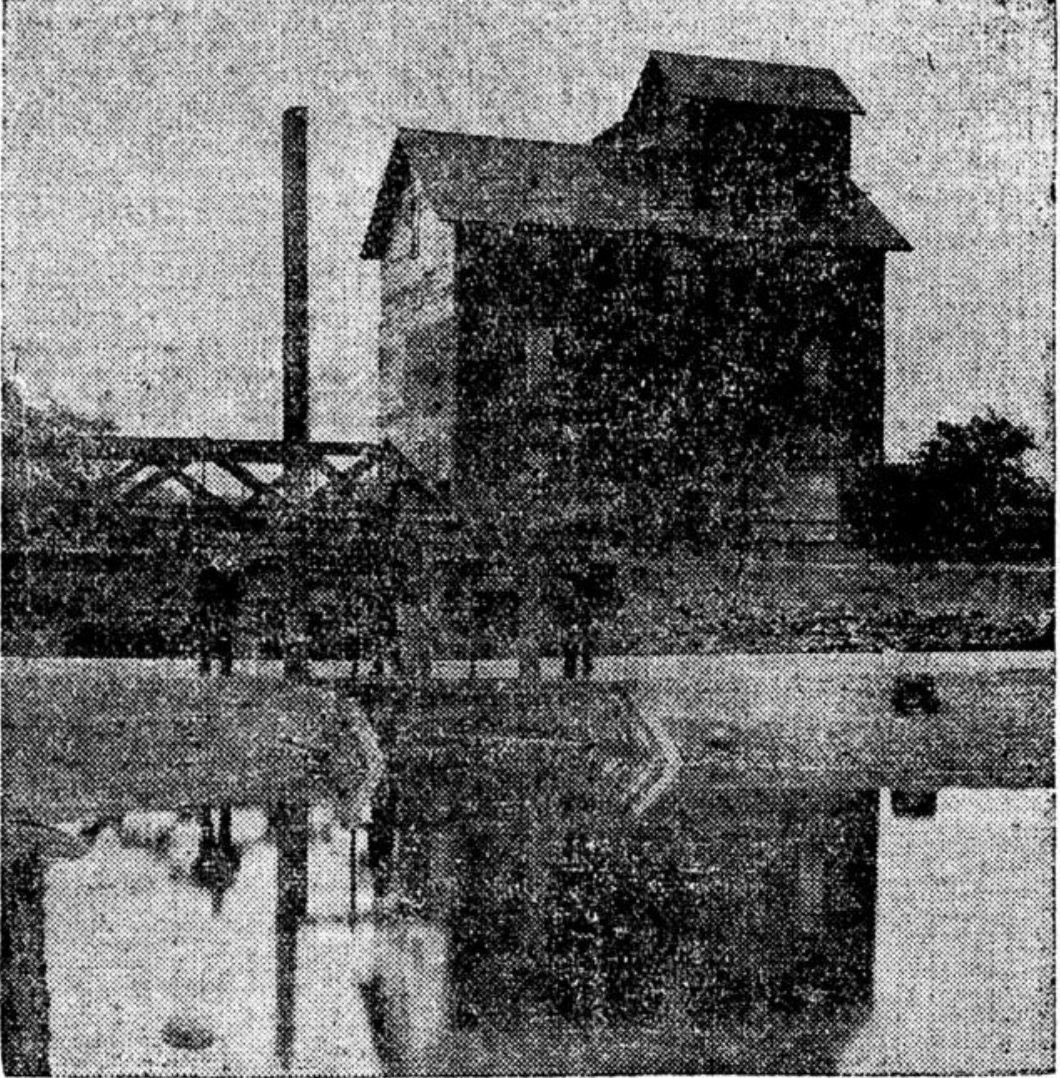
by 1869, things at the mill had taken a difficult turn when a combination of stiffening competition from Minneapolis, the Panic of 1857, and both the sawmill and a newer furniture factory had burned. These factors led to the sale of the mill to Thomas H. Perkins, who razed the site and constructed a 32’ x 44’ flour mill. The mill changed hands again in 1871 and once more in 1874 where it landed in the hands of the Minnetonka Mill Company which was owned by Mr. Veazie, Loren Fletcher, and C. M. Loring. Under their management, the mill’s output was increased to 500 barrels per day. It was under the Minnetonka Mill Company that Charles Burwell came onto the scene. He acted as manager and, in 1883, built his home near the mill.
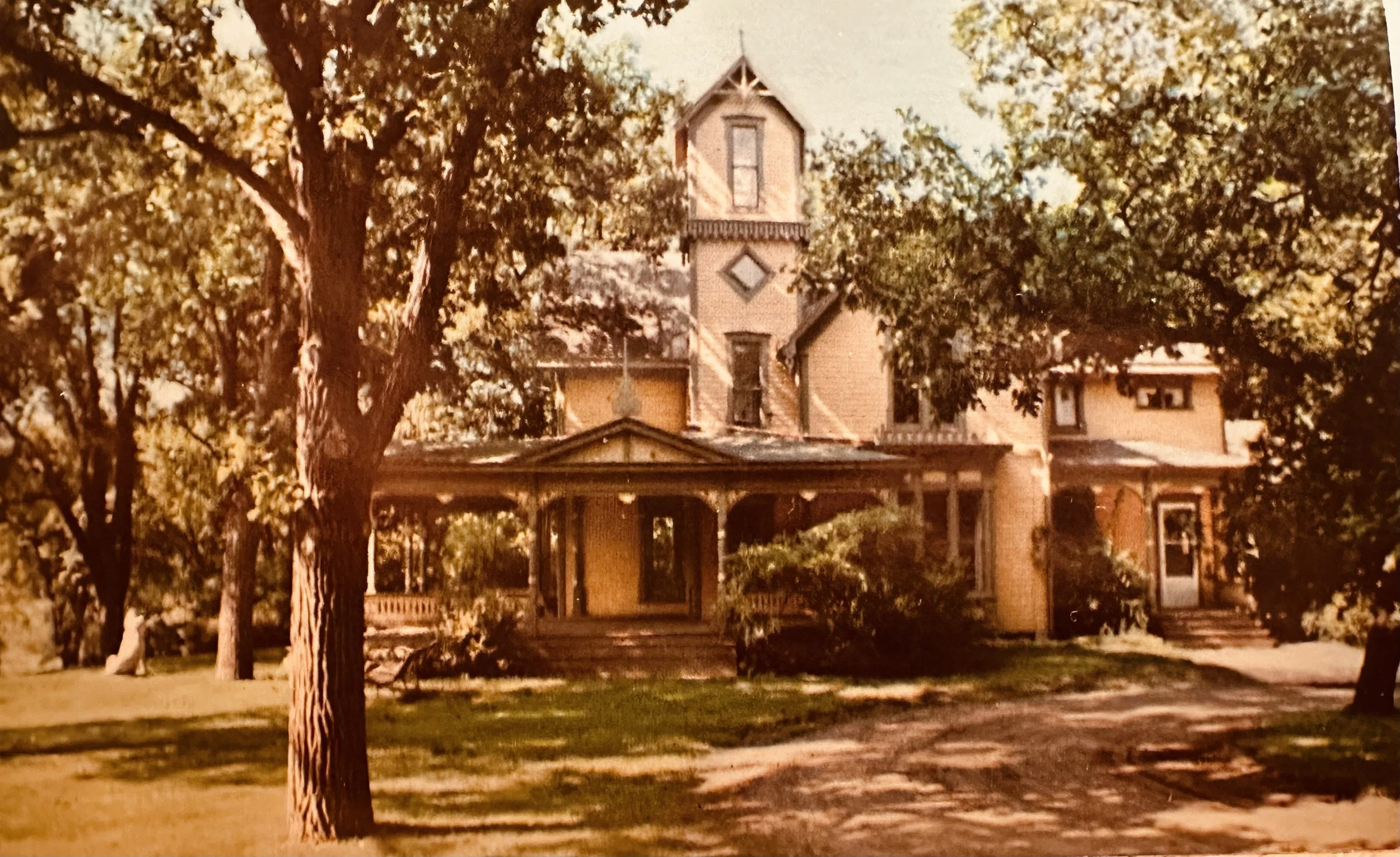
His was a Queen Anne style home with some nods to the Carpenter Gothic style in its woodworking. It was here that Charles & his wife, Mary, would both raise their family and operate the mill. It was during this time that the Minnetonka Mills community was at its strongest. However, the good times would be short lived when, in 1884, the mill was sold to a Canadian company which never materialized to operate it. With effort, Burwell was able to repurchase the milling land and original buildings, where he oversaw its use in milling grist for use as breakfast cereals.
Ultimately, the mill would permanently close its doors and be demolished in 1900. However, the Burwells remained. Charles cared deeply for his home and took immaculate care of it until his death in 1917. Mary, now widowed, continued to live in the home until her death in 1933. Afterward the couple’s daughter, Louise Burwell, occupied the home until 1958 when she sold it to Mr. William Smith. The Smith family kept up the home for another 12 years before donating it to the City of Minnetonka for preservation as a historic building and site.
Today, the home is not alone. Other buildings from the mill’s past stand no more than a stone’s throw away. A millworker’s cottage stands nearby which was originally used for the sawmill before being repurposed to house workers of the flour mill. It was just one of 15 twin cabins built for the sawmill, and is some 20 years older than the Burwell house itself. The other 14 cabins no longer exist. Likewise, an office building still exists which was built for Burwell’s flour mill. It still stands, although modified as a garage.
For Minnehaha Creek’s part, things have changed drastically since the sawmill’s opening in 1852. In its original state, the creek was substantially wider, and deep enough to allow shallow draft steamboats to pass by. The Burwell family even enjoyed a dock and housed a boat on the creek. This changed when, in 1897, a dam was constructed at Gray’s Bay to control the water level of Lake Minnetonka. As a result Minnehaha Creek’s size was dramatically reduced and travel by boat was no longer feasible. As the creek receded, so did the millpond outside the Burwell’s home. Today, the millpond is no more.
While much has changed surrounding the Minnetonka Mills, the Burwell house stands as the last remaining vestige of a town which helped place Lake Minnetonka on the map. Without its impact, settlement and material would have been substantially more difficult to establish and procure. Perhaps it’s a testament to Charles’ dedication to the community that his home is the structure that was destined to be saved in the same way that he had saved the mill itself.
Click the button below to see the largely unchanged interior of the Burwell house, as seen in our tour. Alternatively, visit the home yourself for a guided tour by the City of Minnetonka Historical Society. Their volunteers are extremely knowledgeable about all things Charles Burwell, Minnetonka Mills, and more!
Bibliography of sources:
“Interesting Story of Old Minnetonka Mill”, The Minneapolis Journal, December 29, 1902
Charles H. Burwell House, Wikipedia, https://en.wikipedia.org/wiki/Charles_H._Burwell_House
Charles H. Burwell Residence, Nomination form @ National Register of Historic Places, https://npgallery.nps.gov/GetAsset/719c6361-39a6-443f-803a-2fc72758b794
City of Minnetonka https://www.minnetonkamn.gov/our-city/about-minnetonka/history/burwell-house