The Purest Milk in Minnesota!

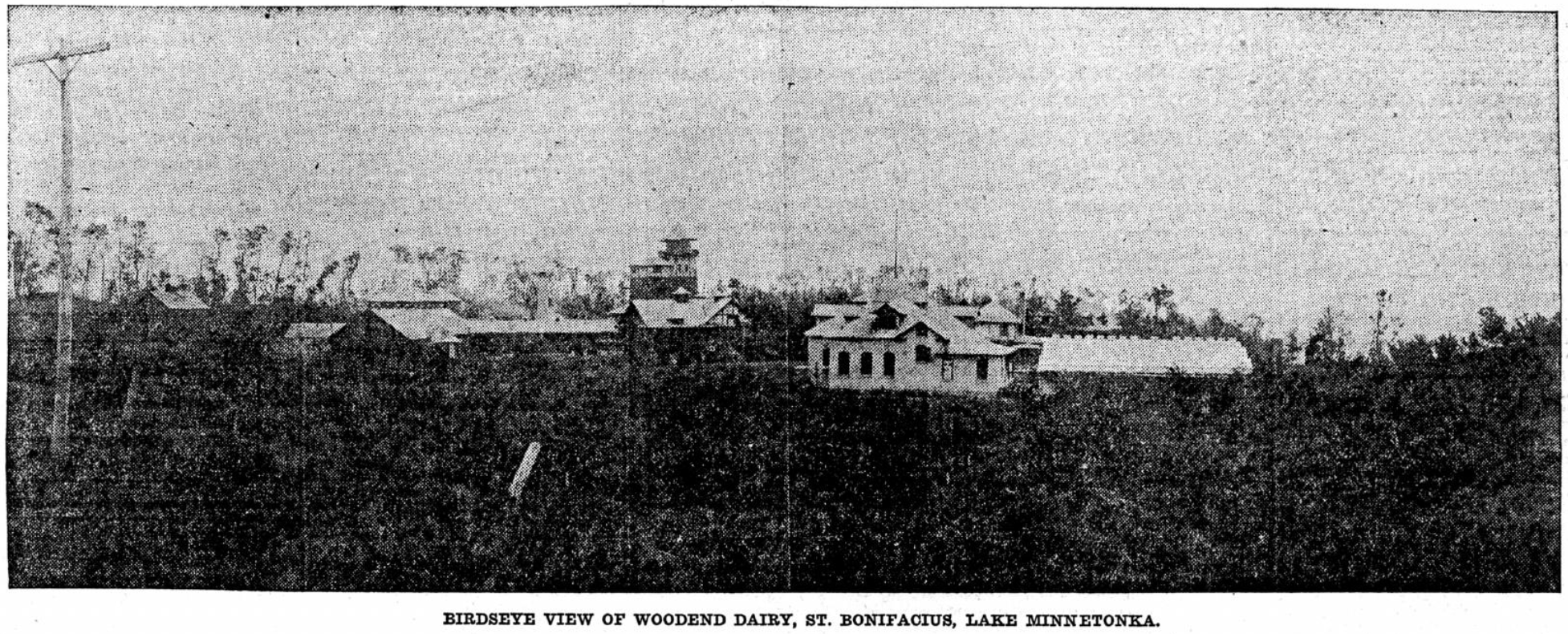
As the 19th century gave way to the 20th, civilized culture found itself at the onset of a great turning point which, today, we might best describe as the Edwardian Era. During this time, feats of engineering and science were paramount in humanity’s collective consciousness. Among these feats was one that graced the shores of Lake Minnetonka. . . Woodend Dairy was built on the strip of land between Halstead’s Bay and Upper Lake Minnetonka. What was once 300 acres of farmland and dense forest became one of America’s foremost producers of high quality dairy.
Albert C. Loring opened his farm, named Woodend, around the spring of 1905 and was quick to become a nationally acclaimed establishment. The farm upheld the absolute strictest regulations on sanitization, sterilization, and employee education. In fact, many of the farmhands and managers were formally educated at both the Minnesota agricultural college and Wisconsin agricultural college. But aside from the standard of cleanliness, what made Woodend so unique for its time? The answer was in their quality process and firm attention to detail.
Firstly, Woodend would only allow the finest cattle of Holstein and Guernsey breeds into the farm and required that each be tested for tuberculosis before arriving onsite. Alfalfa was grown on site for feed to avoid purchasing product from elsewhere. Once the cattle were brought indoors, each animal was thoroughly washed and dried with a sterilized towel before any milking could begin. The building housing them was equally clean, with porcelain coated walls, concrete floors, and an arched porcelain coated ceiling. Due to its construction, it required no support posts and, due to the porcelain coating, had no corners whatsoever. Air was brought in through screened windows near the ceiling which allowed fresh air to cycle into the building without bringing contaminants along with it.
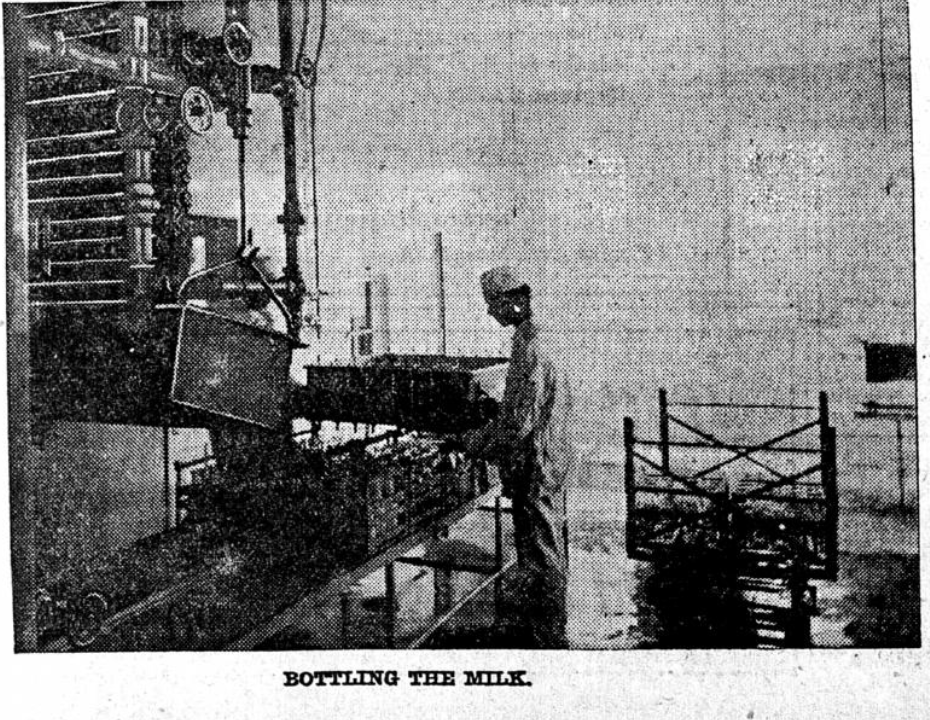
For the time, these conditions were immaculate but it was the workmen who were put through the most rigorous sanitization procedures. Before entering the building, each man would take a full shower, don a sanitized suit, and was required to wash hands between milking each cow. Once the milk was extracted, workmen would dump it into sterilized canisters before loading them into a cart and sending them to the second floor of another sterile building where they were emptied into a series of cooled pipes. From there the milk moved downstairs to the bottler who filled the glass jars with the, now bacteria free, milk. To be doubly sure of its purity, each bottle was covered with a sanitized cap and paper seal. Cartons of the jarred milk would be packed with ice and sent to the local station where they’d be transported into Minneapolis, arriving at the railroad depot located at 1530 1/2 Nicollet Ave. From there, it remained on ice until the moment it was removed for delivery outside the consumer’s home.
The whole process proved to be revolutionary in both its effectiveness for contaminant removal and for overall product yield. As if these precautions weren’t enough, the farm housed a fully equipped bacteriological laboratory where the milk from each cow was tested and reported to the farm’s superintendent, B. D. White. Meanwhile, the milk was regularly tested by the Hennepin County Medical society for its purity. If the product was deemed pure, the dairy received (or retained) its distinction as “certified milk”. At the time, Minnesota’s requirements for certified milk were three times stricter than those in other major states like New York.
For all their efforts, the Woodend cattle proved to be incredibly profitable. While the average cow produced some 160 pounds of butterfat annually, the lowest producing cattle at Woodend yielded upward of 600 pounds! While hundreds of Minneapolis homes were supplied with this high quality milk, it was the Lake Minnetonka communities which enjoyed the freshest product possible.
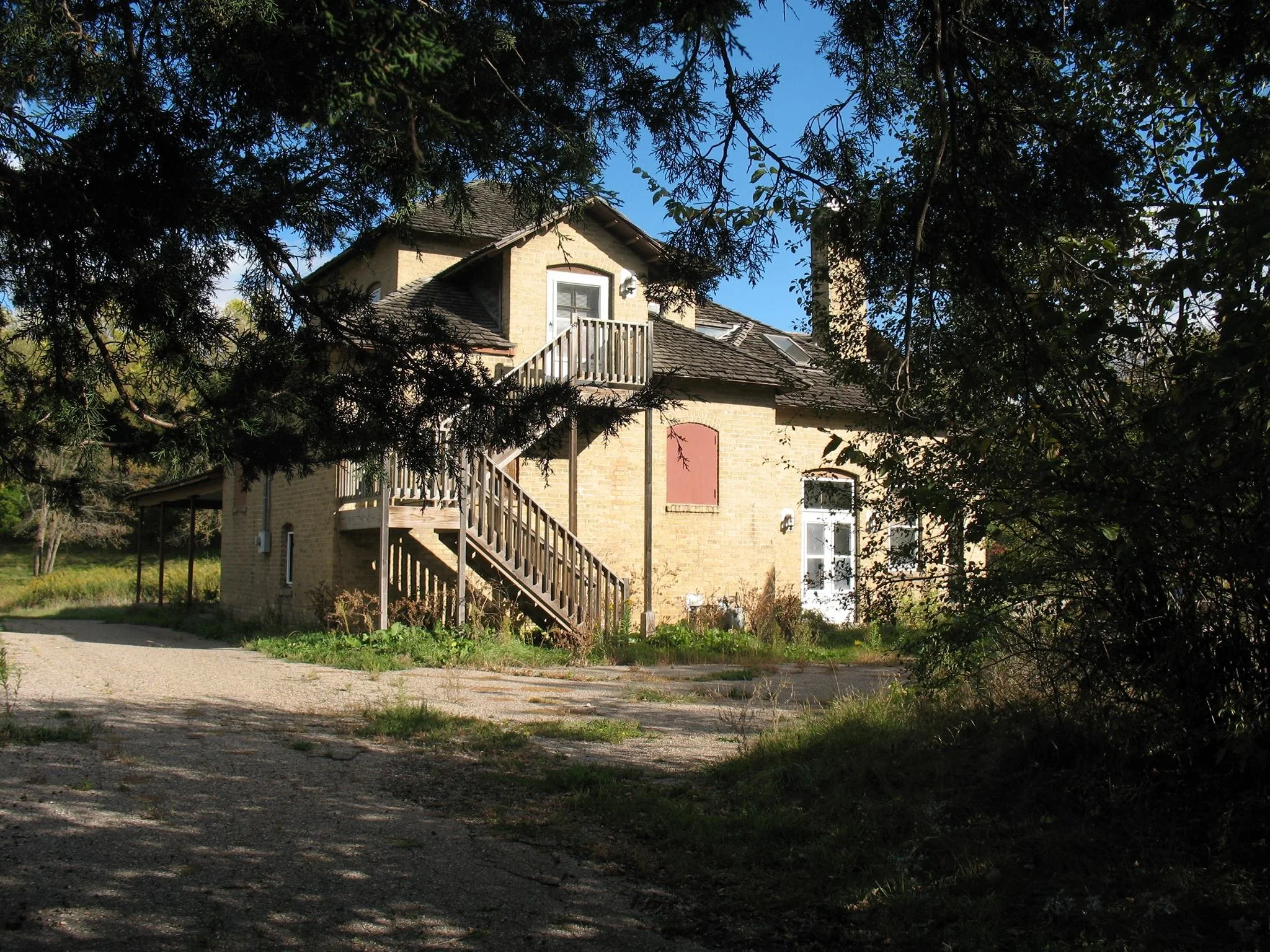
Woodend Dairy’s creamery building, now largely abandoned.
This building currently resides within the Three Rivers Park District. Photo by Nancy Ferrell Geng, 02/14/2015.
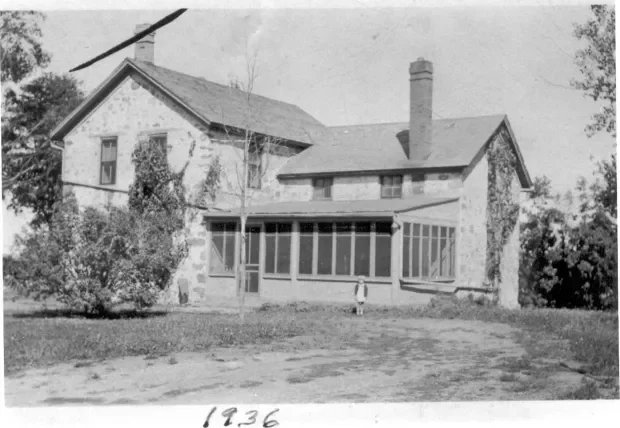
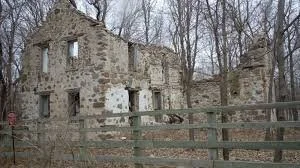
Photos of the Schmid farmhouse & its ruins located at Lake Minnetonka Regional Park. This structure was part of a 334 acre farm and its construction predated Woodend Dairy’s opening by roughly 25 years. In 1905, the final 80 acres of the Schmid family’s farmland were purchased by Albert Loring as an addition to the dairy farm. During the dairy’s operation, the home was often rented to workers, a practice lasting into the late 1940’s before being abandoned entirely. From then, decay slowly began creeping into the structure, leaving behind the fieldstone walls and some remnants of wooden floors and window casings.
Today, these ruins stand as a rare relic of Lake Minnetonka’s agricultural past. Both of which are deserving of their own future article here.
Woodend Dairy photos sourced from The Minneapolis Journal, 08/12/1905.
Schmid home photos: https://swnewsmedia.com/local-ruins-on-register-of-historic-places/article_5fcf6fbe-1617-508f-a781-51e9140d1ec1.html