A Crystal Bay Flyover

Crystal Bay is quite literally the centerpiece of Lake Minnetonka. While other bays have notoriety through their ports, islands, and swimming spots, Crystal Bay is the dedicated thoroughfare of the lake. Though, there’s much more to this bay than may meet the eye while quickly sailing through!
Of all the bays, Crystal Bay ranks among the cleanest bays with the highest water clarity. This is, in large part, due to the bay’s hard sandy bottom and its unusual depth chart. While many other bays have depths around 70 feet, Crystal Bay has a remarkable depth of roughly 108 feet. This spot can be found in the bay’s northeastern corner, as you’re approaching the Maxwell Bay channel. The bay also holds at least one identified wreck in the form of an overturned pontoon, whose precise location is kept a quiet secret.
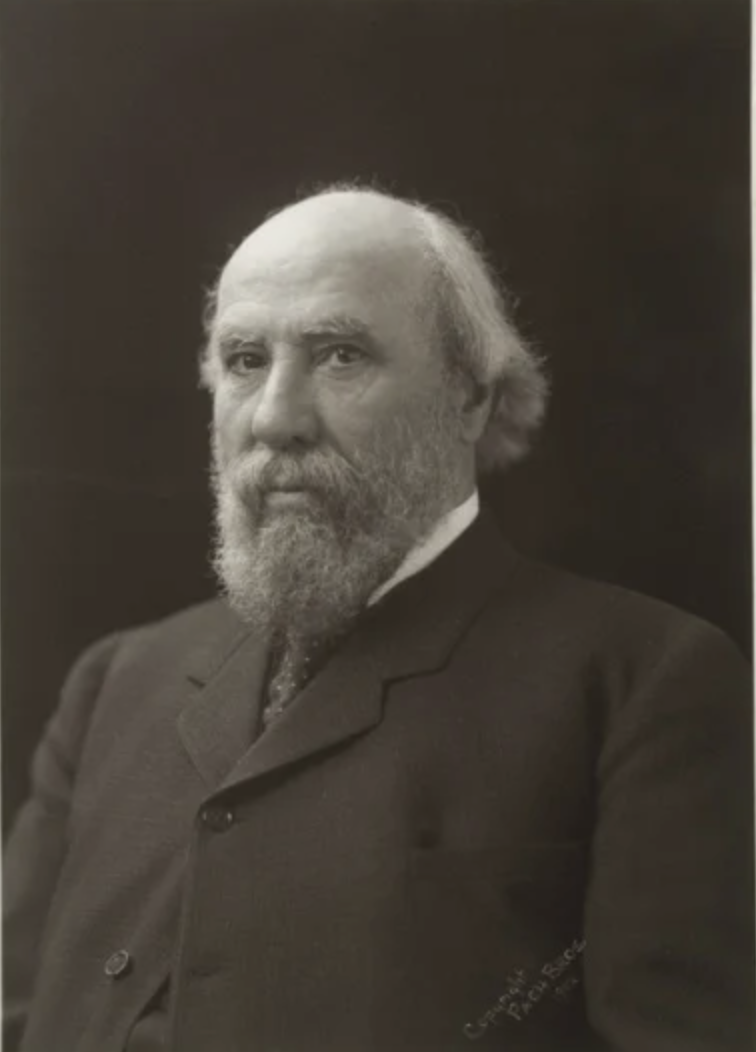
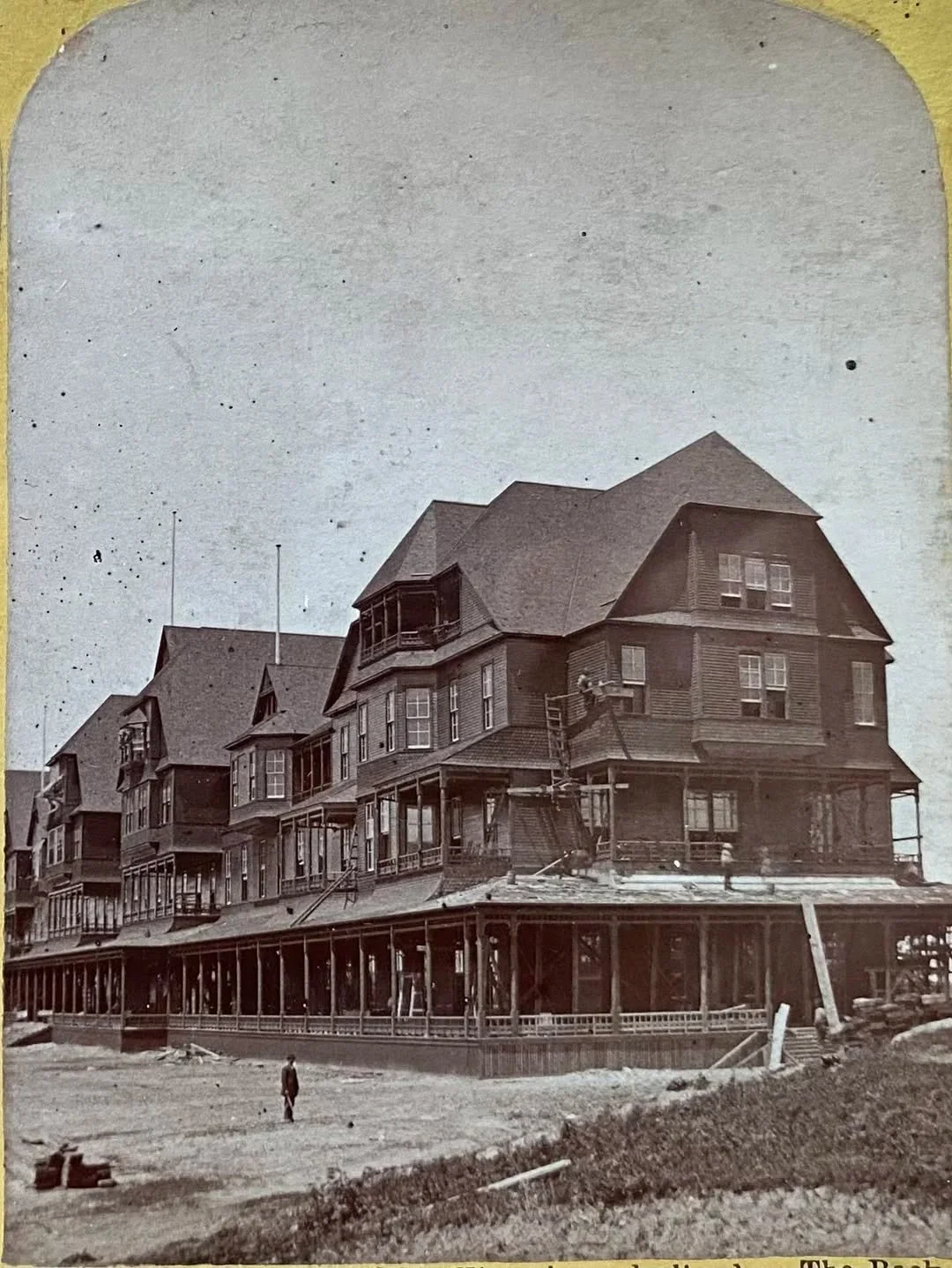
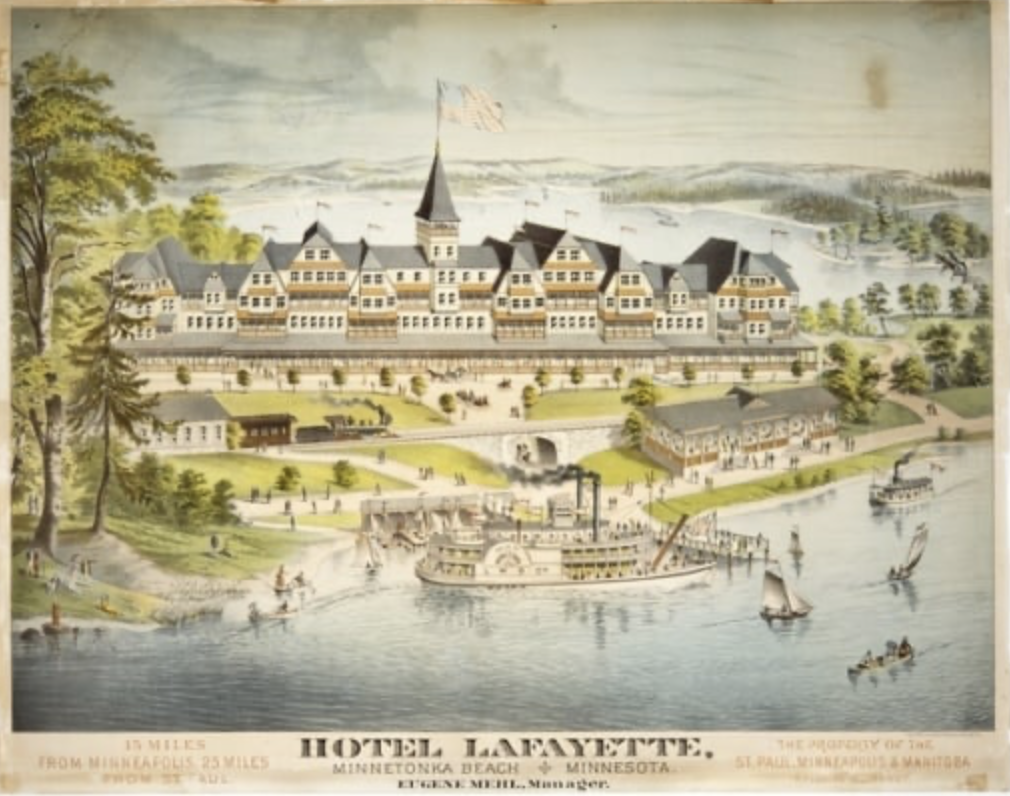
Crystal Bay also plays a middling role in the lake’s history as the backdrop to James J. Hill’s Hotel Lafayette and Great Northern Railway. In 1881, Hill built the wooden railroad bridge that still stands today and, throughout the 1880’s, Hill’s company controlled a massive portion of the bay’s shoreline spanning roughly from the Arcola bridge to Navarre. It’s worth mentioning that the original hotel actually faced into Lafayette Bay, with Crystal Bay serving as the waterfront for the hotel’s back yard. Eventually, the land was given to Hill’s wife Mary before being gifted to a religious organization and, later, subdivided out for cottages.
By the 1920’s, Crystal Bay had become the backdrop for construction of Shoreline Drive around 1922 as well as the 1924 construction of the Lafayette Club’s third clubhouse / hotel. It would also be the primary place to see Minnetonka Beach’s original steel water tower being erected in 1928.
That would bring us to the time of this photo: 1934. By this time, James J. Hill—who had made such an impact on its scenery—had been dead for eighteen years, his railway bridge was already 53 years old, and Steamboat Minnehaha had been at the lake bottom for eight years.
From our vantage point, we can see the original Arcola bridge for Shoreline Drive, the Great Northern bridge, Lafayette, and “Grandpa’s Cove” branching off to the right. Today, the cove is somewhat more grown in with cattails and milfoil, but still visible and navigable. Unlike most postcards and photos of Minnetonka, an aerial photo like this is somewhat uncommon, due to the airplane having been invented only 31 years prior.
Sometime this summer, take a moment to cruise Crystal Bay and appreciate all that makes it among Minnetonka’s most unique bays!
Author’s Note:
This article was among my first, but was both incredibly short and not well guided. What you’ve read is a lovingly revised and more accurate version of my earlier work.
Photo Sources:
James J. Hill photograph - Minnesota Historical Society
Hotel Lafayette artist’s rendition - Minnesota Historical Society
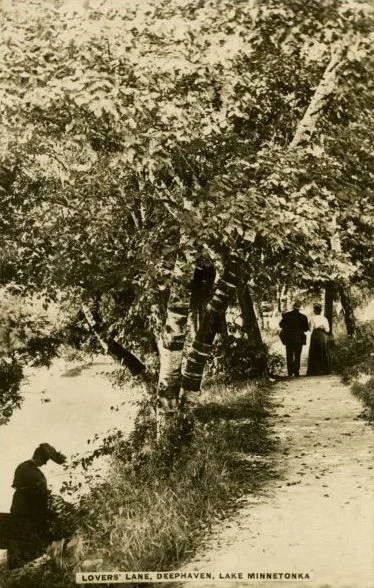
All other images from the private archive of the Minnetonka Minute