Maple Heights Inn & the Human Connection

See full photo gallery below.
When looking through a collection of 800+ postcards, it’s easy to lose track of those which are unique and those which are entirely unremarkable. Through the mass, some particular cards shine through. One such example is this one, depicting Mound’s Maple Heights Inn. Among the vast number of Minnetonka postcards, very few display a small image in favor of a larger writing surface on the front. Let’s take a look at both the inn itself and the visitor who left their mark on this card!
Maple Heights Inn was located on Phelp’s Island near Pelican Point and facing Spring Park Bay. Built in the 1880’s by Mr. J.H. Woolnough, the hotel was known as both Maple Heights and, simply, Woolnough’s. As many hotels on the lake’s upper shore were, Maple Heights catered largely to the budget-conscious traveler. Visitors could access the hotel by steamboat or via taking the Northern Pacific railway to Spring Park and walking a half mile to the hotel. In the earliest days of American settlement, the island was densely wooded and difficult to traverse but, just after the turn of the 20th century, the winds were changing. In 1904, a tornado touched down on Phelps Island and decimated much of the Big Woods that had previously blanketed the terrain. Realizing the potential, the Tuxedo Park Company purchased the 545.9 acre island and began to subdivide it into small parcels to be sold at auction. As the subdivided plats were purchased and built upon, the area’s demographics began to take a very different trajectory away from tourism and toward summer homes for Minneapolis & Saint Paul residents!
For the owners of Maple Heights Inn, this change must have been cause for some concern. Though, as free enterprise tends to be, they adapted to the growing community around them. The inn, still boasting its reasonably nightly rates, was able to continue to capture the business of visitors to both Mound and Spring Park. The inn received mention in a 1901 edition of the National Health Journal which praised them for their “cozy cottages, always filled, arranged in suites with each room having an outside entrance.” Rates for these rooms could go for $1.50 per day or between $7-$10 for a week.
As the 1910’s rolled in, the Twin City Rapid Transit Company’s fleet of Streetcar Boats began to make regular stops at Phelps Island which, undoubtedly, helped boost the inn’s business even as tourism on the lake continued to wane. Alongside this boost would have been the addition of roadways through Spring Park which allowed a mass of automobiles to reach the inn’s door. It was around this time that the Young People’s Bible Camp Association would occupy the hotel each July, renaming the inn as Tipi-Wakan while they were there. Yet, all these increases in traffic could only take the old business so far. . .
In 1945, Hotel Del Otero burned in Spring Park, bringing a depressing end to the last of the lake’s grandest hotels. By this time, the streetcar boats had been gone for nearly 20 years and, the following year, the last remaining streetcar boat would sink in Lower Lake. That being the Minnetonka (Formerly Hopkins). Then finally, in 1964, the end had come for Maple Heights. Having opened its doors some 75 years prior, the inn was among the oldest still operating on the lake’s shoreline. Simultaneously, it was the last of the Upper Lake hotels still standing and, with its demolition, brought the end of hotel operations in Mound & Spring Park.
Today, much of the former Maple Heights grounds are occupied by the Lakewinds condominiums, situated just south of the Black Lake / Spring Park Bay bridge. . As for the postcard above and its sender, there’s yet more to tell. . .
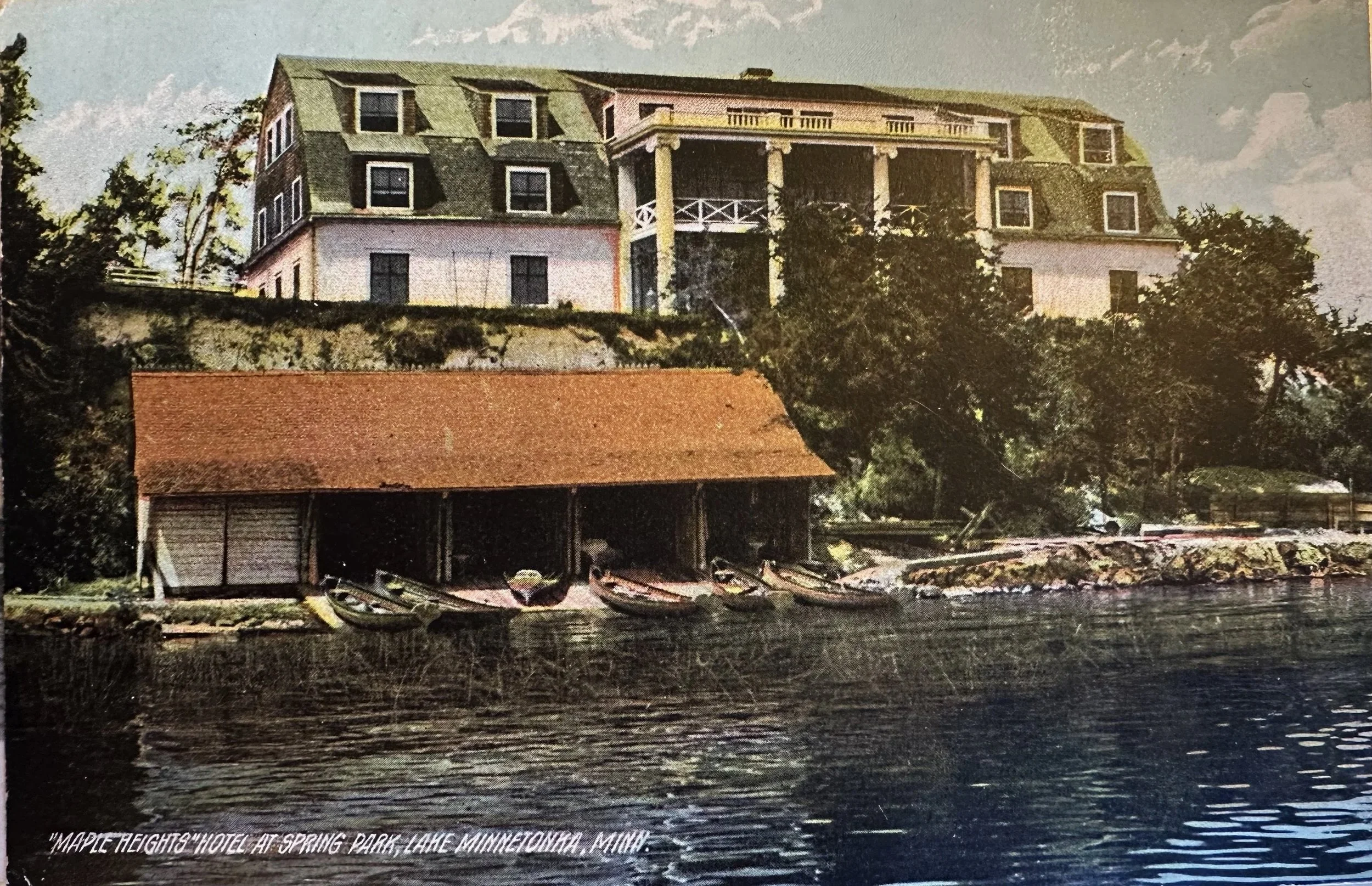
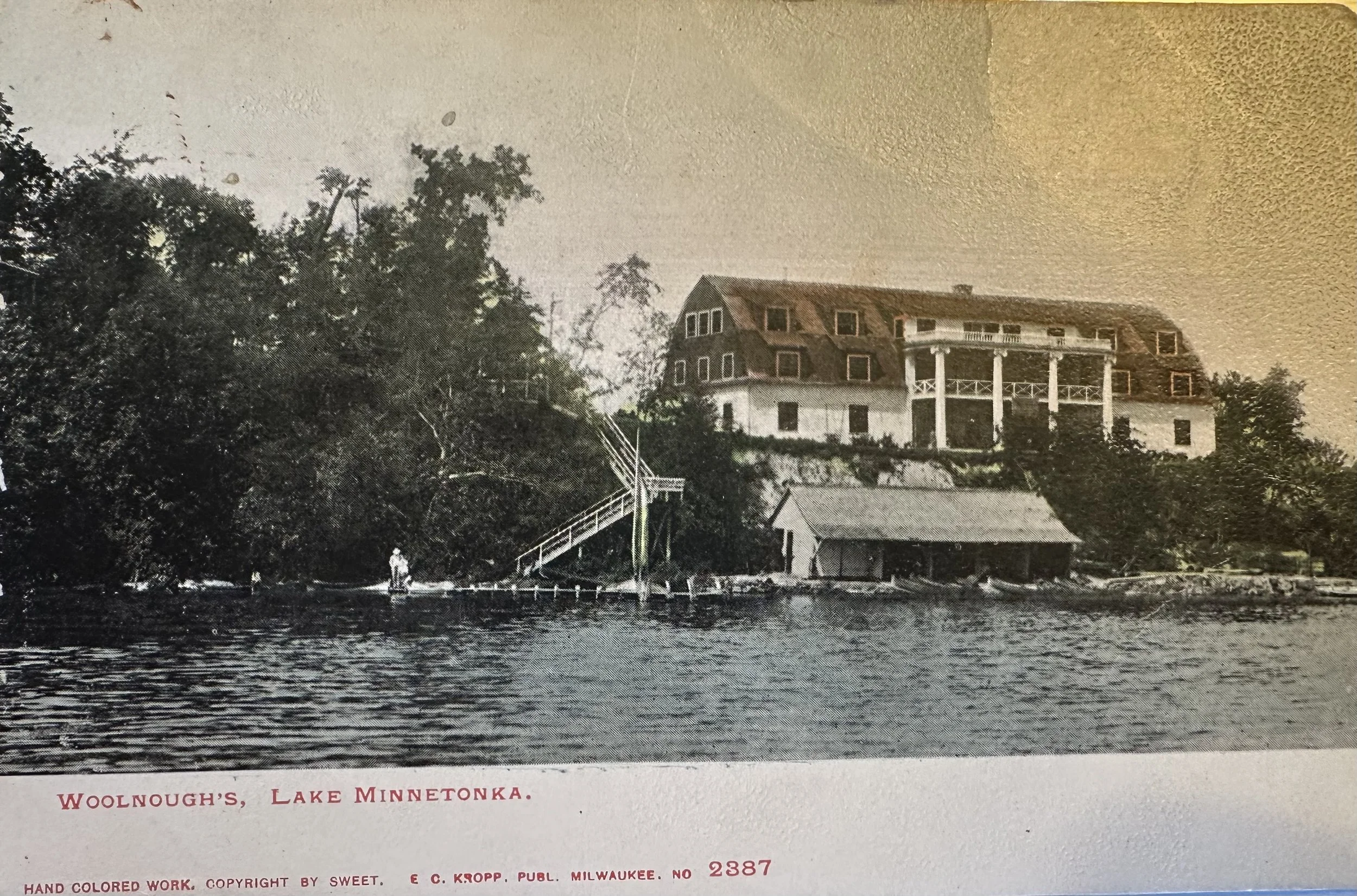
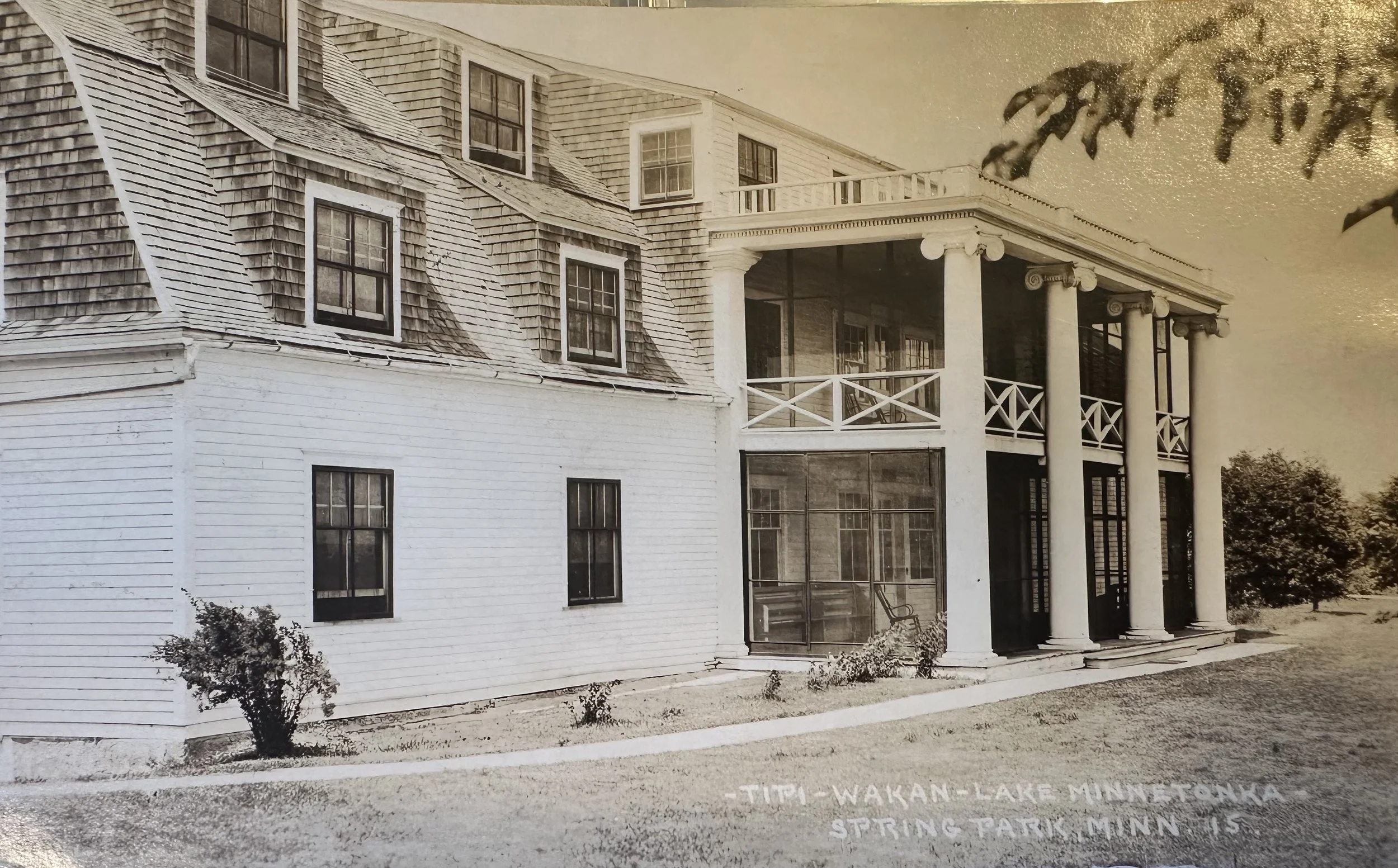
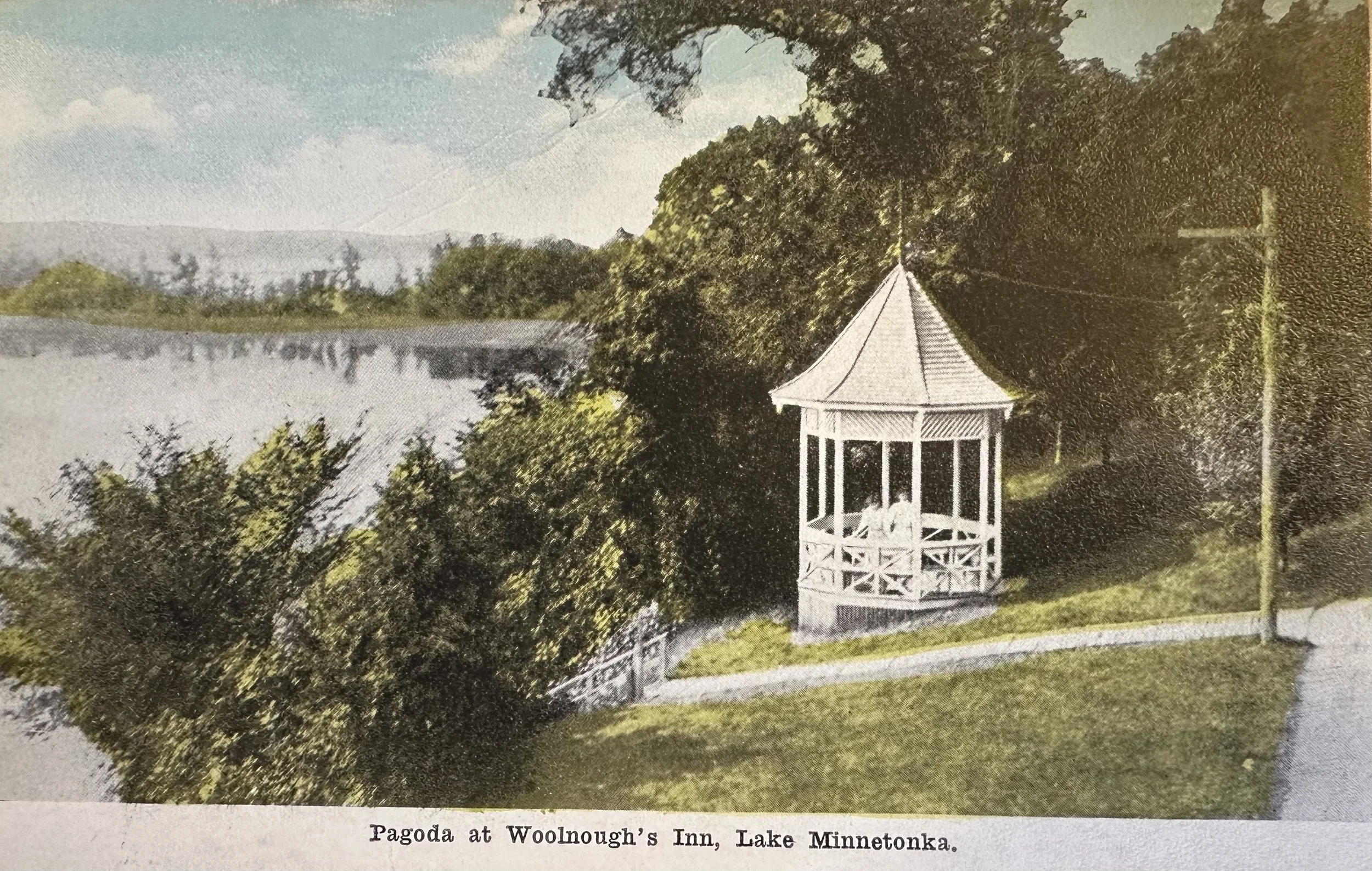
The author, presumably a child, writes, “Dear Rose, We are spending the vacation up here. It is a beautiful place. Mommie (?) went on bathing today. It is a roasting hot day. I am learning to row a boat. Love to all, Constance”
Written and posted in early 1905, one can be certain that Rose and, likewise, Constance have since passed away and the Pennsylvania home in which Rose lived no longer exists. It was torn down around 1915 and the home that replaced it still stands on that site today.
This postcard, like the thousands of others collected by the Historical Society, myself, and other folks, have the potential to display a glimmer of the lived experience from our community.
If nothing else, these glimpses into the past can offer us a moment to appreciate what we all have in common:
The experience of today.
This article is a thorough rework of the author’s first writing of Lake Minnetonka’s history. Lovingly rewritten and given much more historical detail, length, and emotion.
Bibliography of sources:
Lake Minnetonka’s Historic Hotels, Wilson Meyer, 1997
National Health Journal Special Edition, 06/15/1899
Historical Backgrounds of Mound Minnesota, Gimmestad, 1964
Photo sourced from the Minnetonka Minute private archive