The Biggest & Brightest: Belle of Minnetonka
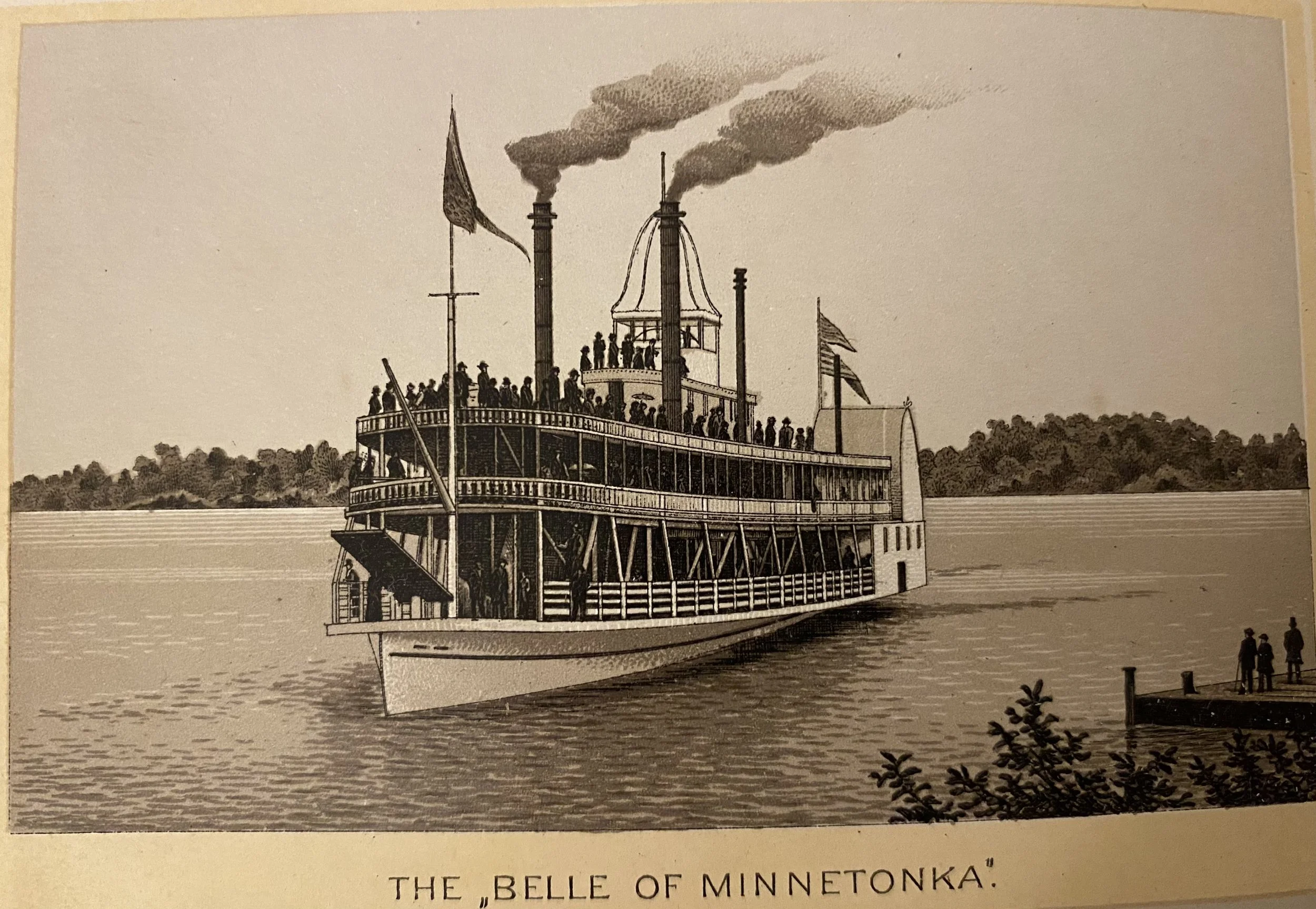
Lithographer: Louis Glasser
Of the roughly 100 steamboats to have graced Lake Minnetonka, one boat stands well above all others as the largest. That being the famous Belle of Minnetonka. Entering the scene in 1882 at the height of Minnetonka’s gilded age the Belle, as she’d come to be known, was poised to be one of the lake’s most successful boats. Not to mention her ties to established hotels, railroads, and local figures that would help prop her up into a position that was nearly impossible to surpass. Yet, her story begins quite far from our hometown’s shore. . .
Beginning her life in Cincinnati, Ohio under much less elegant pretenses, a dual side wheel paddleboat was being completed by Captain Charles Muhleman and making trial runs in the Ohio river on January 20, 1866 under the name Phil Sheridan. The new steamer was fondly named after Union Army general Phillip Sheridan who was famous for his efforts in bringing the Confederate Army & Robert E. Lee’s surrender just one year prior. To make the reference clear, her paddle box was painted with a rendition of Sheridan’s conquests on horseback.
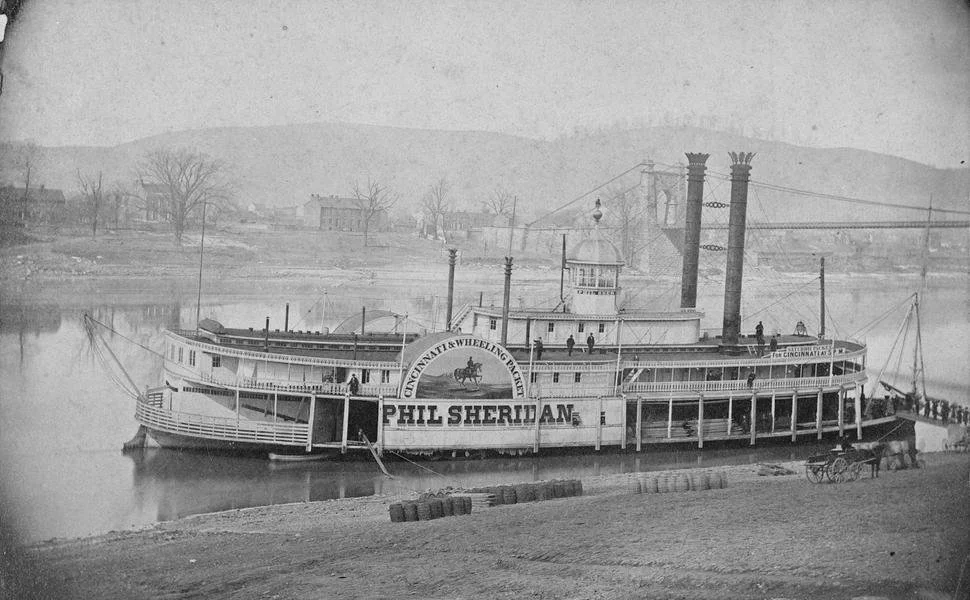
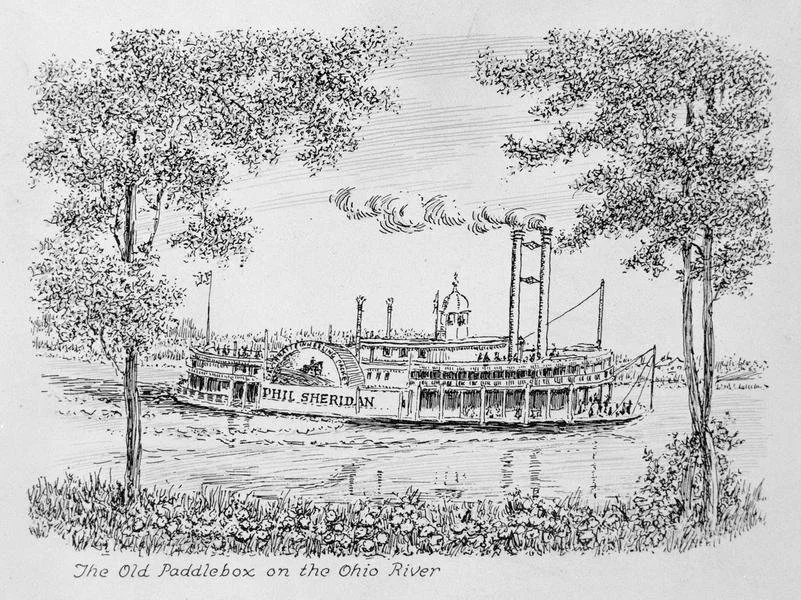
It was just two months after her successful launch that Captain Muhleman committed to selling her to the well known Davidson Line as a passenger steamer but, on her last voyage before the transfer, she was blindsided by a storm just outside Dover, Kentucky. Her smokestacks were lost to the river and damages totaled some $1,500 but she was transferred to her new owners anyway. After repairs were complete, the Davidson Line moved Phil Sheridan to the upper Mississippi where she was chartered to sail primarily from Saint Louis, Missouri to Saint Paul in Minnesota. It was during this time that she gained notoriety as the fastest ship on the Mississippi where she continued to serve this route until the mid 1870’s. Then in 1876, while in La Crosse, Wisconsin for repairs, she broke free of her cradles and sank in the Mississippi. At the time, it was fairly common for machinery to be salvaged from newly wrecked steamers. This was the case for the Phil Sheridan, who had her hull cleared of its boilers, turbines, and other major components.
Her salvaged parts were bought by James J. Hill’s St. Paul, Minneapolis, & Manitoba Railway and, in August of 1881, it was announced that the company would be launching a newly constructed steamer into Lake Minnetonka. The construction of the Belle was two fold: To serve as accommodation for & means of travel to Hill’s (soon to open) Hotel Lafayette, and as direct competition to the already established steamer City of Saint Louis. The City, as she was sometimes nicknamed, was owned by the competing Minneapolis & Saint Louis Railway. This competition was fierce from the onset, with the two boats regularly racing one another for the quickest crossings. While racing was formally forbidden on Minnetonka, it’s widely assumed that it was occurring regardless. Racing was commonplace for steamboat operators who wanted to capture “ribbons” that’d merit their boats as being the fastest in their locale. Such was the case from lake boats to river steamers, and even the transatlantic giants.
The Belle of Minnetonka was launched on July 4, 1882 to much applause from the community and began regular service across both Lower and Upper Lake Minnetonka. She was an especially common sight at the docks of Hotel Lafayette, which held its grand opening just two days prior to the Belle’s launch. Another common route would be from Wayzata to the Upper Lake, which required her to skinny through the shallow Hull’s Narrows channel. It was a tight fit, but she could make the pass!
In an era where size and speed mattered, the Belle of Minnetonka was sure to impress even the most cynical onlookers. Her hull spanned a stunning 285’ in length with a 56’ beam and three open air decks. Like the Phil Sheridan before her, she was propelled by two 30’ tall paddle wheels that were driven by three 42” by 24’ long boilers. She was electrically lighted, a rarity for her time, and boasted an electric beacon which could, “light up the lake for from seven to ten miles around.”
Specs aside, her passenger accommodations were equally impressive:
a 2,000 passenger capacity with additional promenade space & dance floor on her main deck. On the second deck were a 100x40 foot promenade, 70x50 foot open space, 75x16 foot dining room, and a 40x16 foot ladies cabin. Both the dining room & cabins were, “finished in white and gold, with rich stained glass windows, mirrors, and every other appliance to make up a most pleasing effect”. Not to mention a women’s restroom and sitting room. As well, the boat featured a 40 person sleeping room measuring 70x15 feet, and a pilot house perched above it all. For all these things, the Belle was touted to be among the most luxurious inland passenger liners in the whole United States.
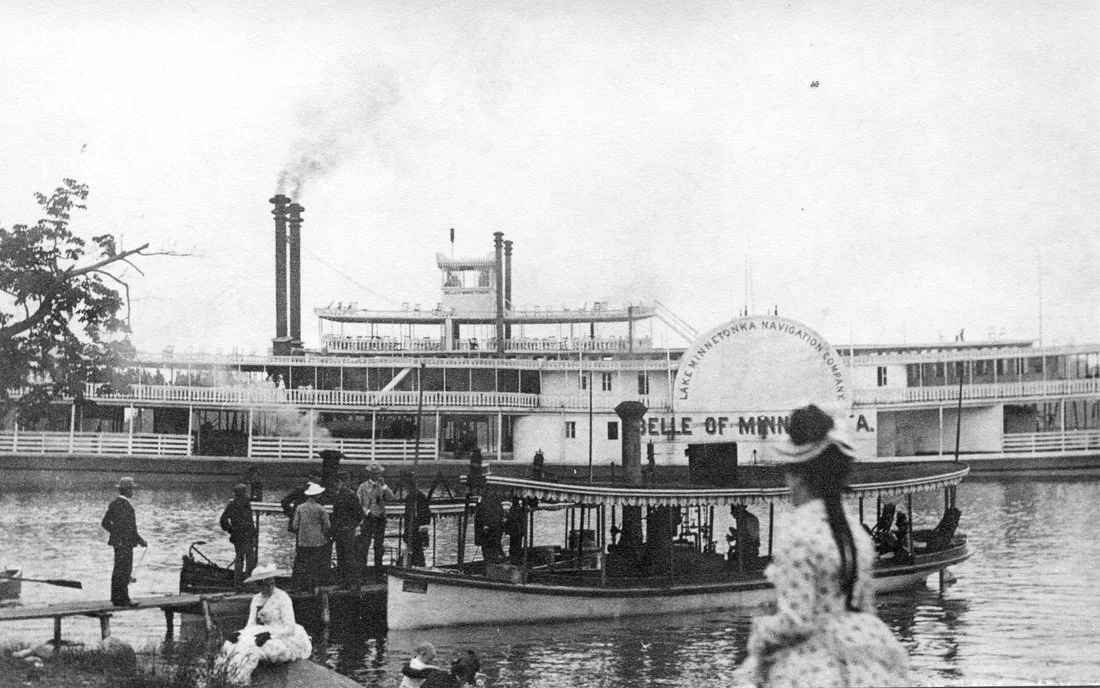
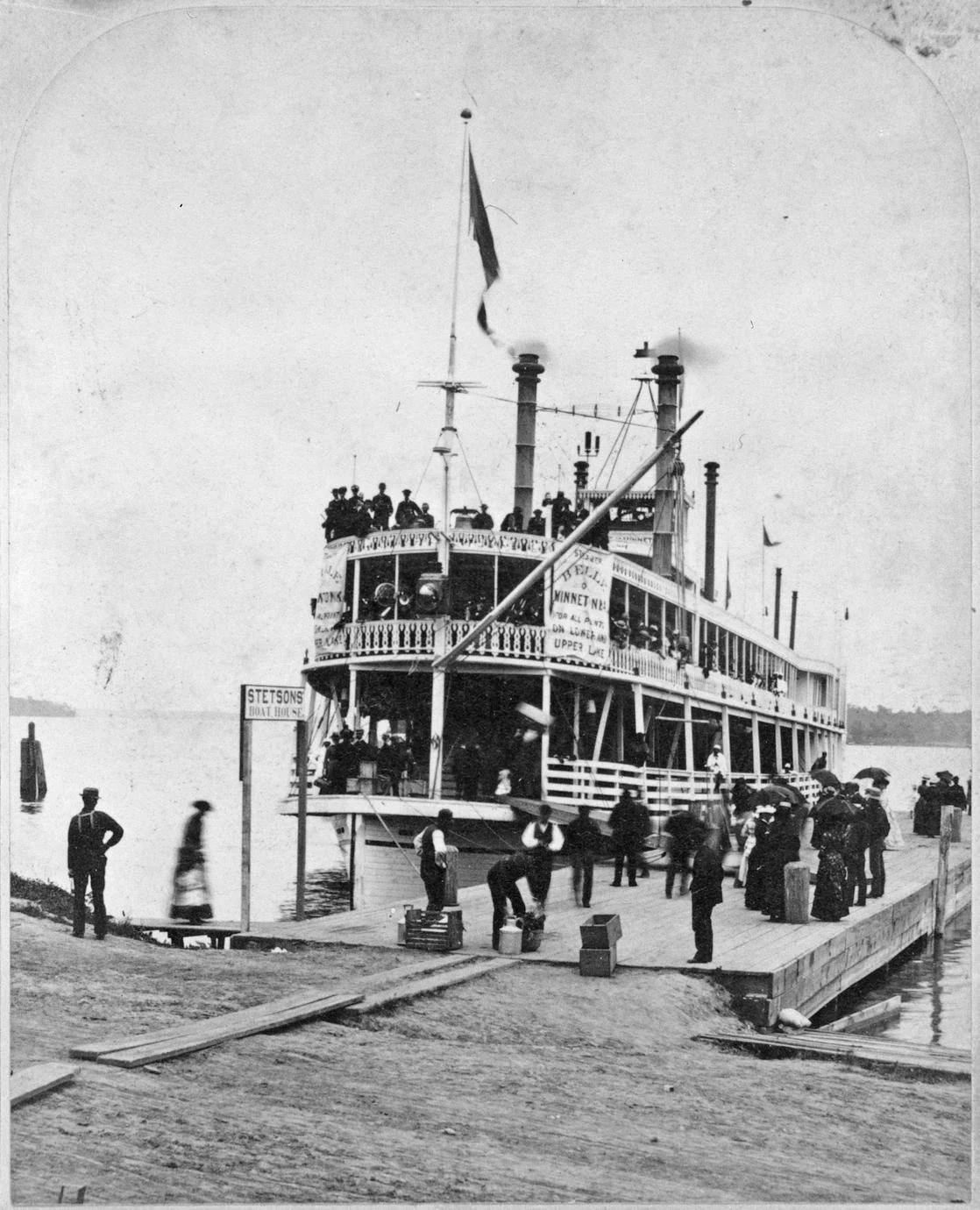
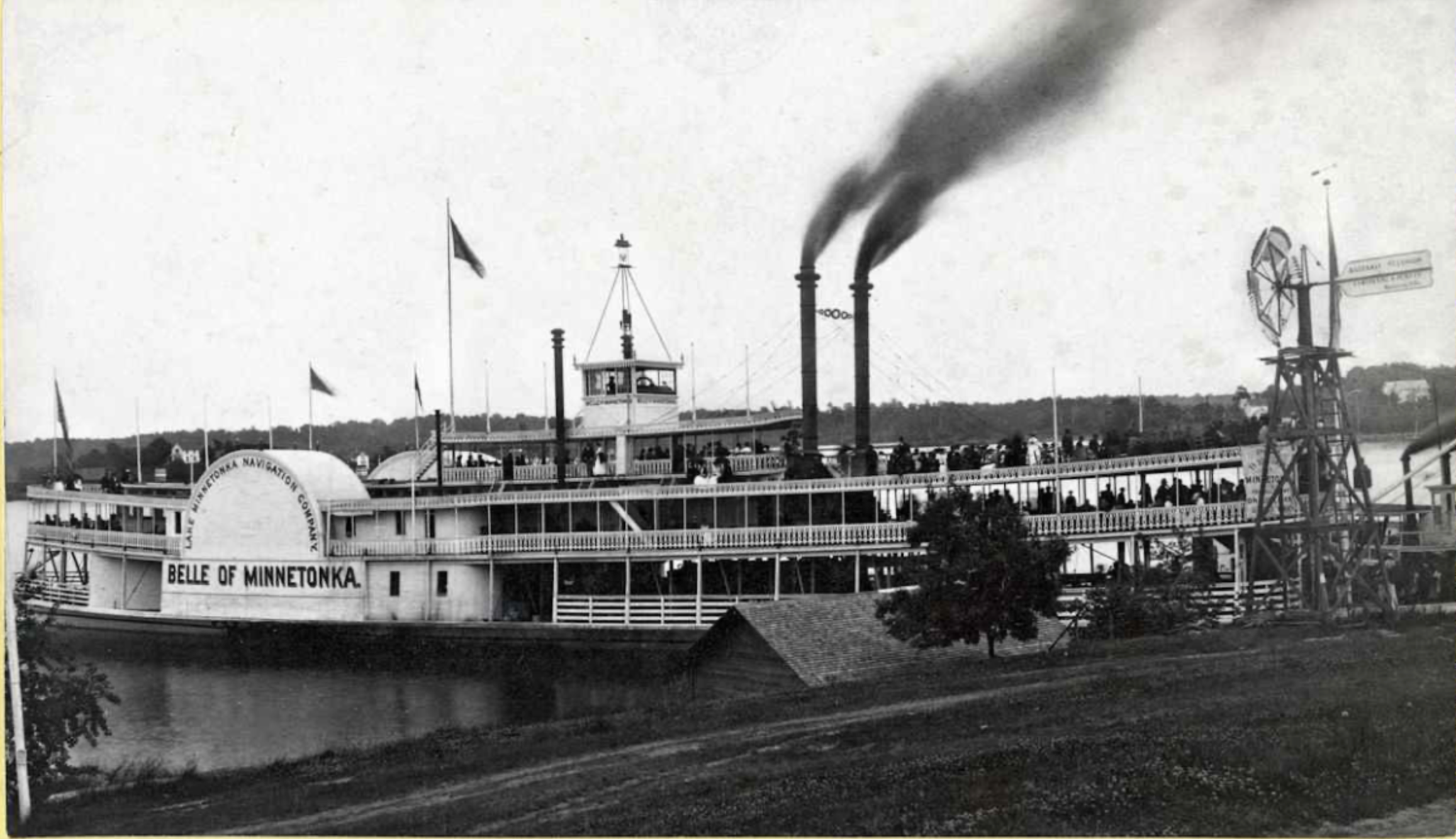
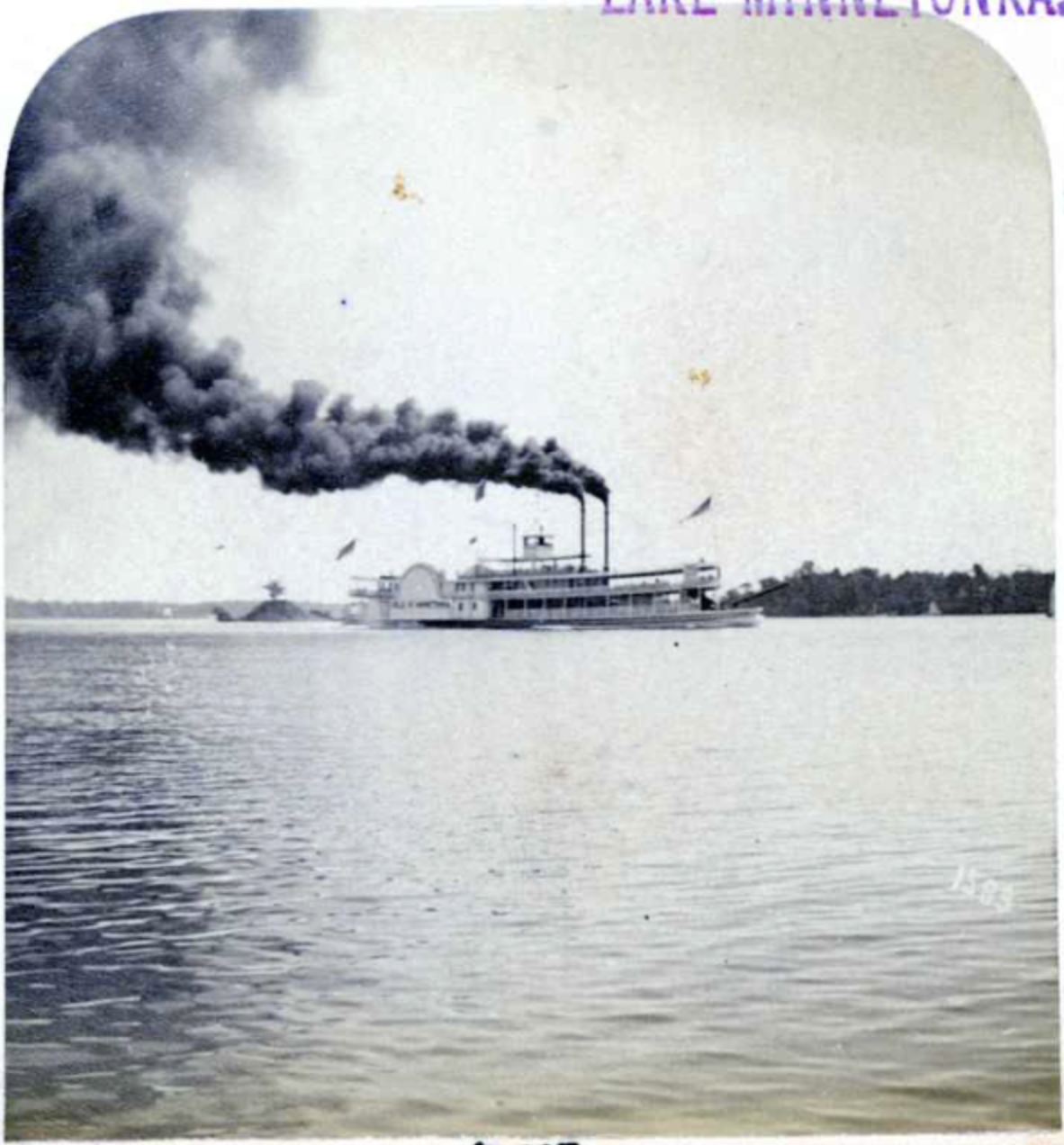
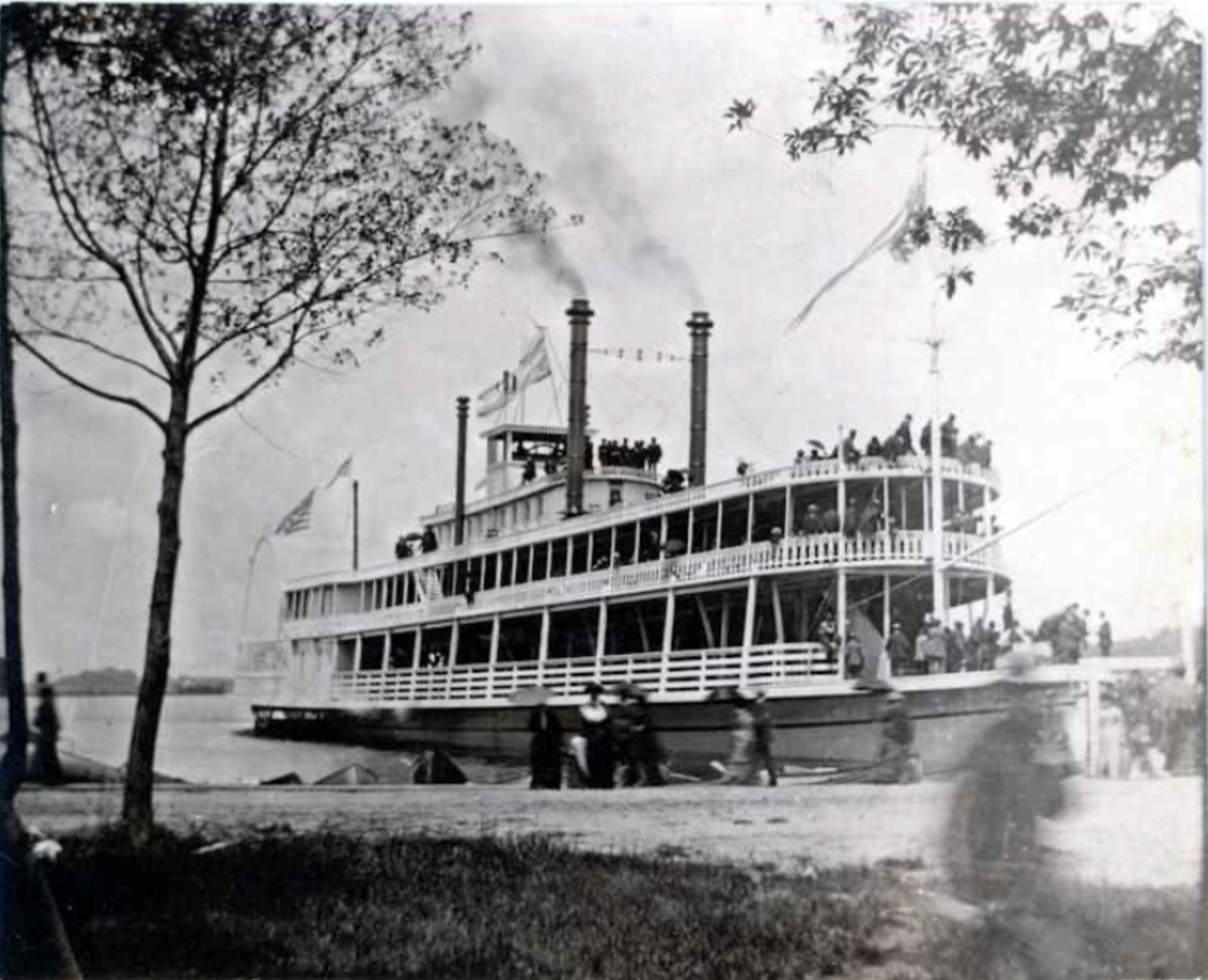
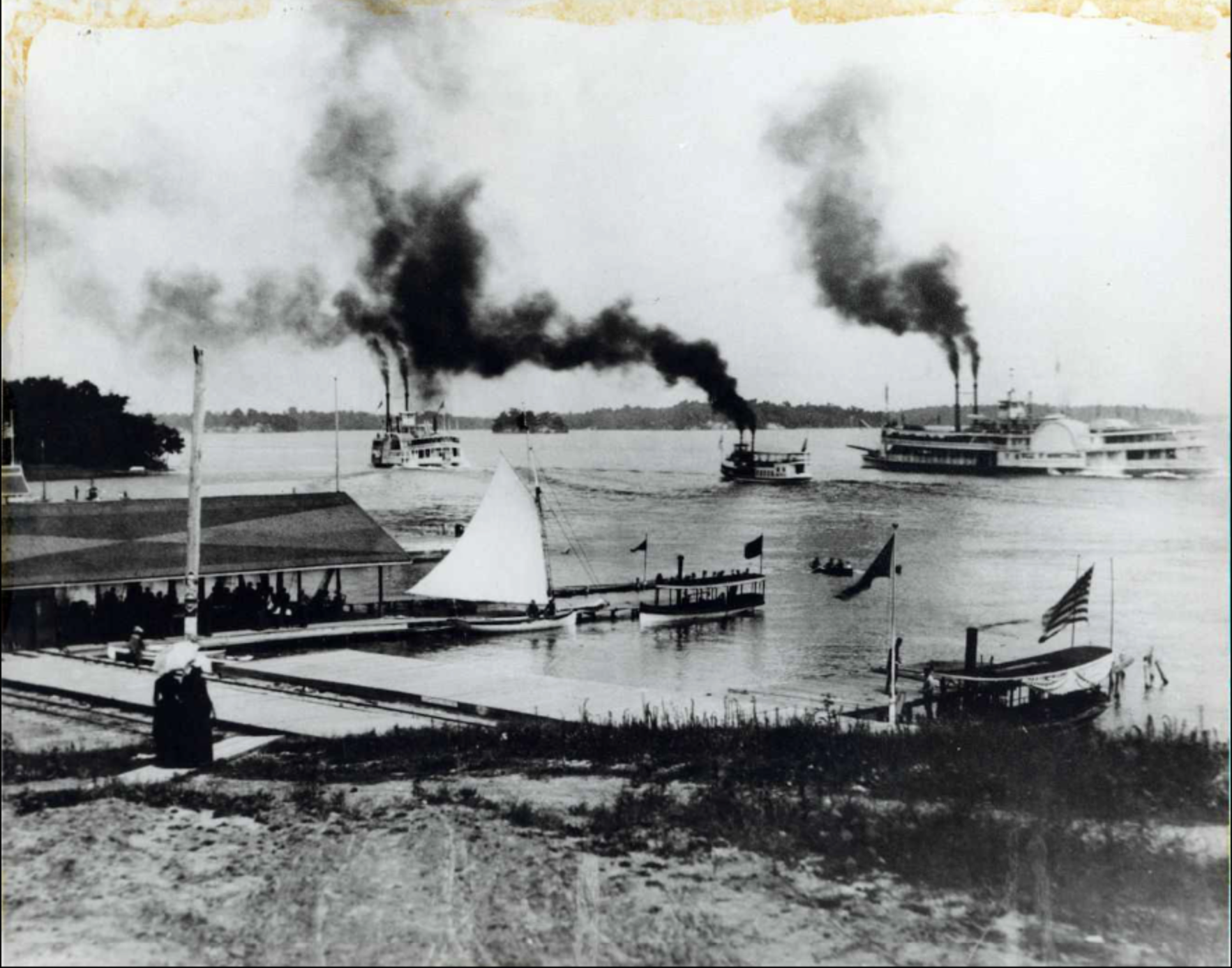
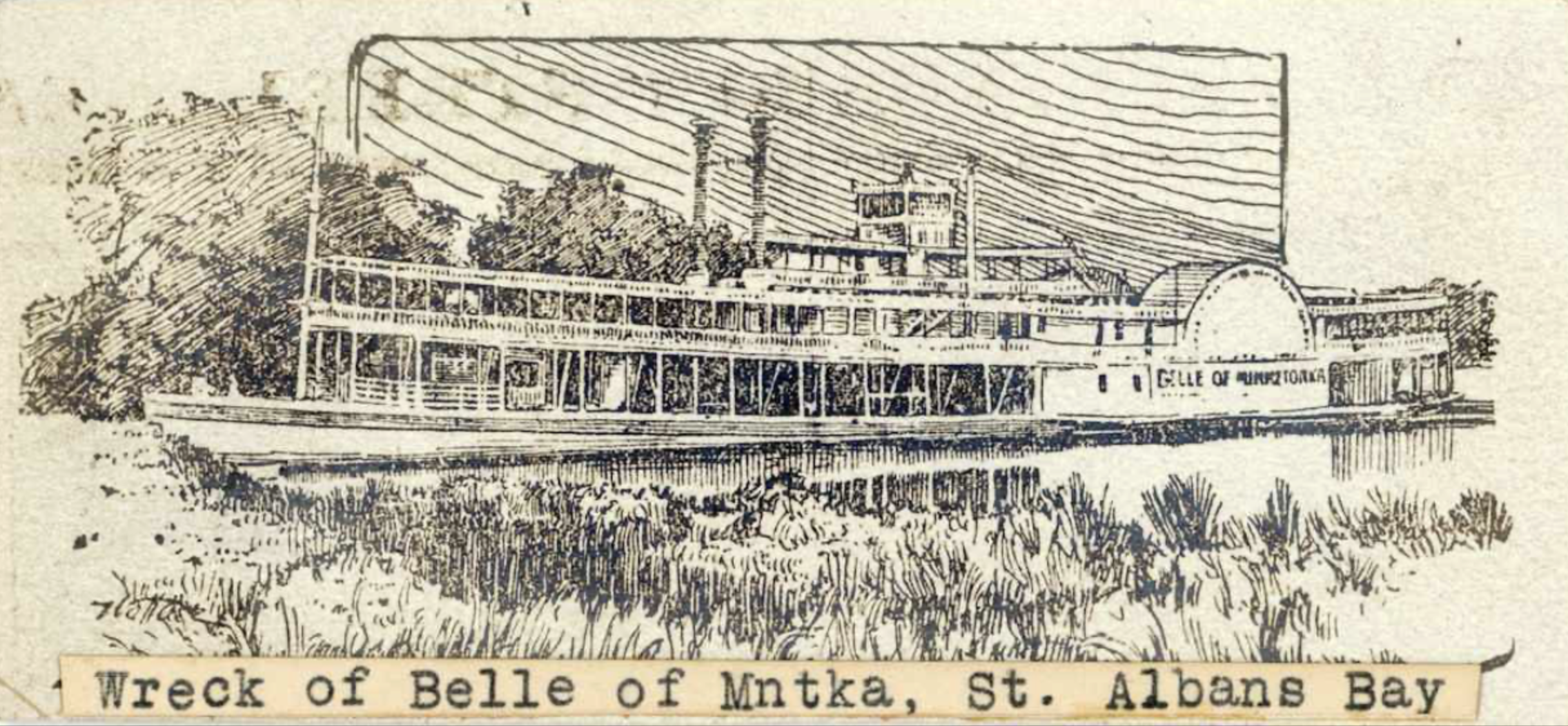
Naturally, a boat of such titanic proportions was sailing in uncharted territory for Lake Minnetonka’s scene and she had more than a couple incidents of crashes, hull breaches, and even an explosion in her exhaust piping. Much of this damage could be traced back to causes which were definitely unrelated to racing. (wink, wink) Fortunately, no passengers were injured in any accidents. By June of 1883, the rivalry between the steamers largely ended when the City of Saint Louis and Belle of Minnetonka were put to work as fleet mates under the ownership of the newly formed Lake Minnetonka Navigation Company. It was following this merger that she received a number of updates which, in all, opened her decks and allowed for an additional 500 passengers on each crossing. This would bring her passenger capacity to 2,500 but she often carried upwards of 3,000. In comparison, other Minnetonka steamers of the day could carry something like 40-100 passengers and were generally less than 70' in length. (City of Saint Louis aside)
Despite her surplus of grandeur and having little competition, the Belle suffered from one thing that no other steamer on Minnetonka had, or would ever, suffer from: herself. . . Despite the era’s booming tourism economy, Hotel Lafayette’s success, and other attractions, she was simply too costly to operate on such a comparatively small body of water. In the 1885 season, she was floated out for only special voyages and, by August of 1887, saw just two crossings before being prematurely winterized in Saint Albans Bay. In 1890, just 8 years after her initial launch, the Belle of Minnetonka would be permanently sequestered to her winter berth in Saint Albans Bay. Here, she would waste away for another 7 years before having her machinery stripped away and sold off.
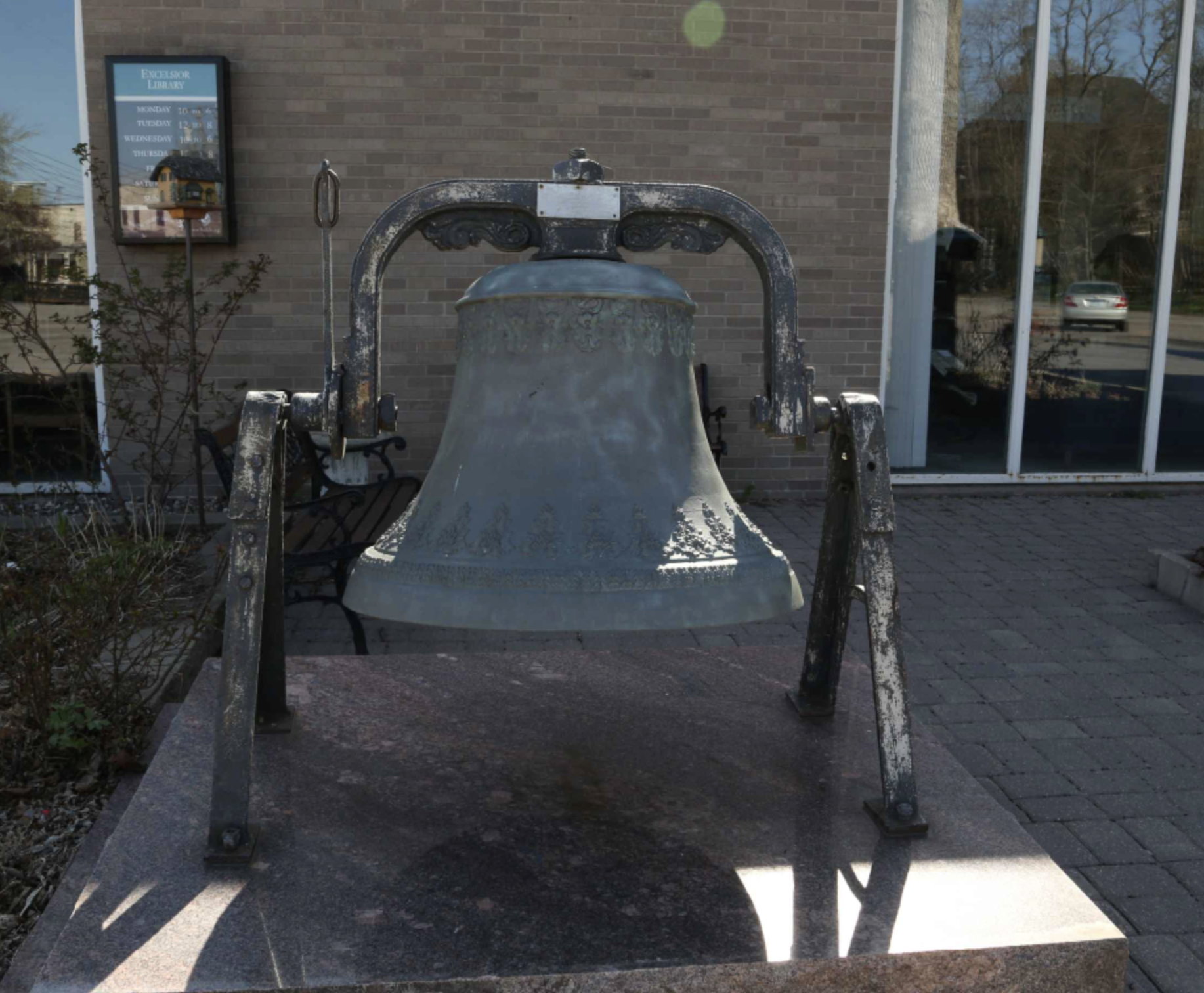
The empty hulk of the Belle would rest on the shore of Saint Albans Bay for another few months until November, 1897, when she was fully dismantled and her keel sunk in the middle of the bay. The Belle’s whistle was removed and affixed to the City of Saint Louis until its dismantling in the fall of 1898. Her bell, which belonged to the Phil Sheridan before her, was purchased by a group of Excelsior residents and installed in the newly completed Excelsior Public School’s belfry. Most recently, it was displayed in front of the old Excelsior Public Library but was moved from that site in 2014 ahead of the building’s demolition.
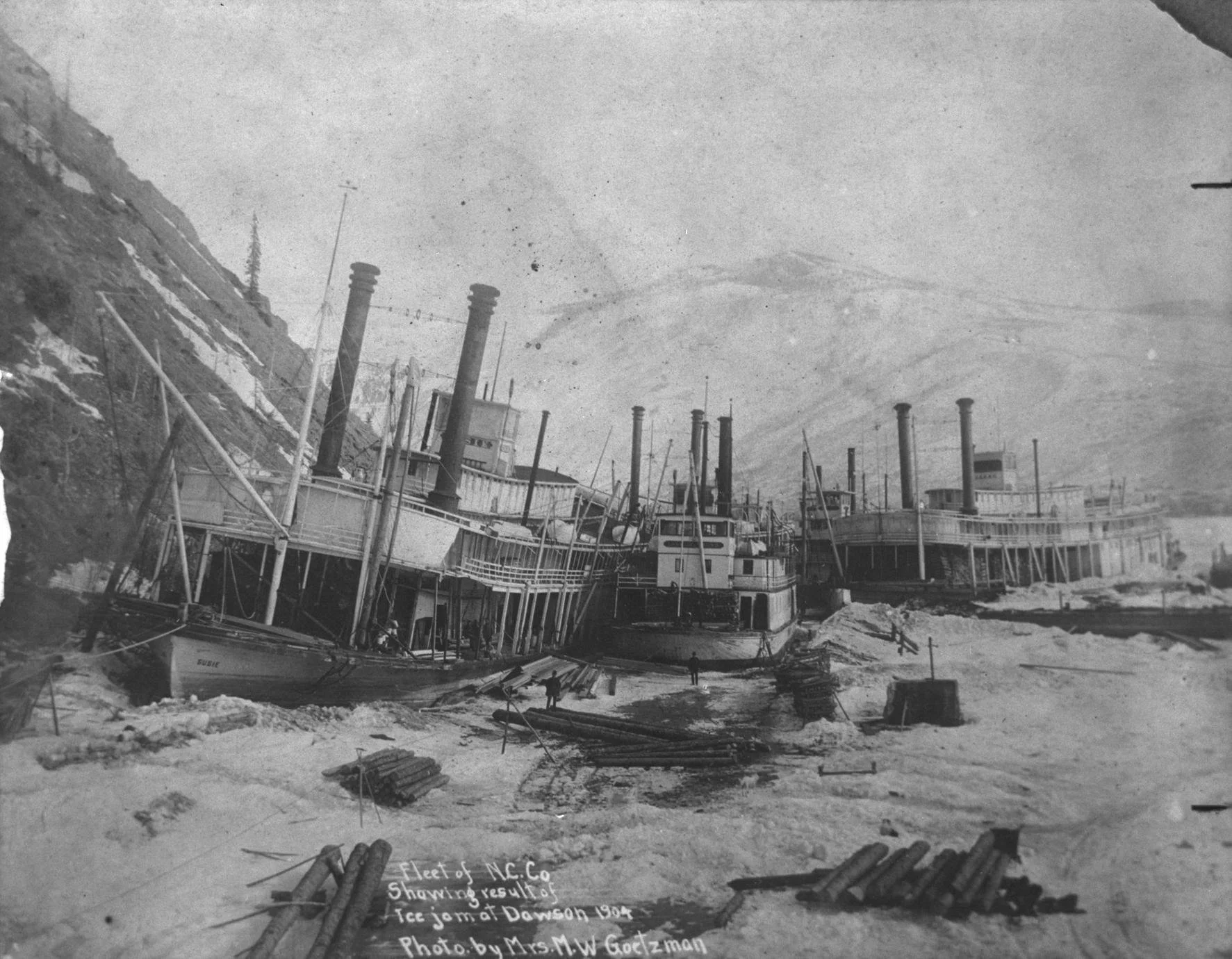
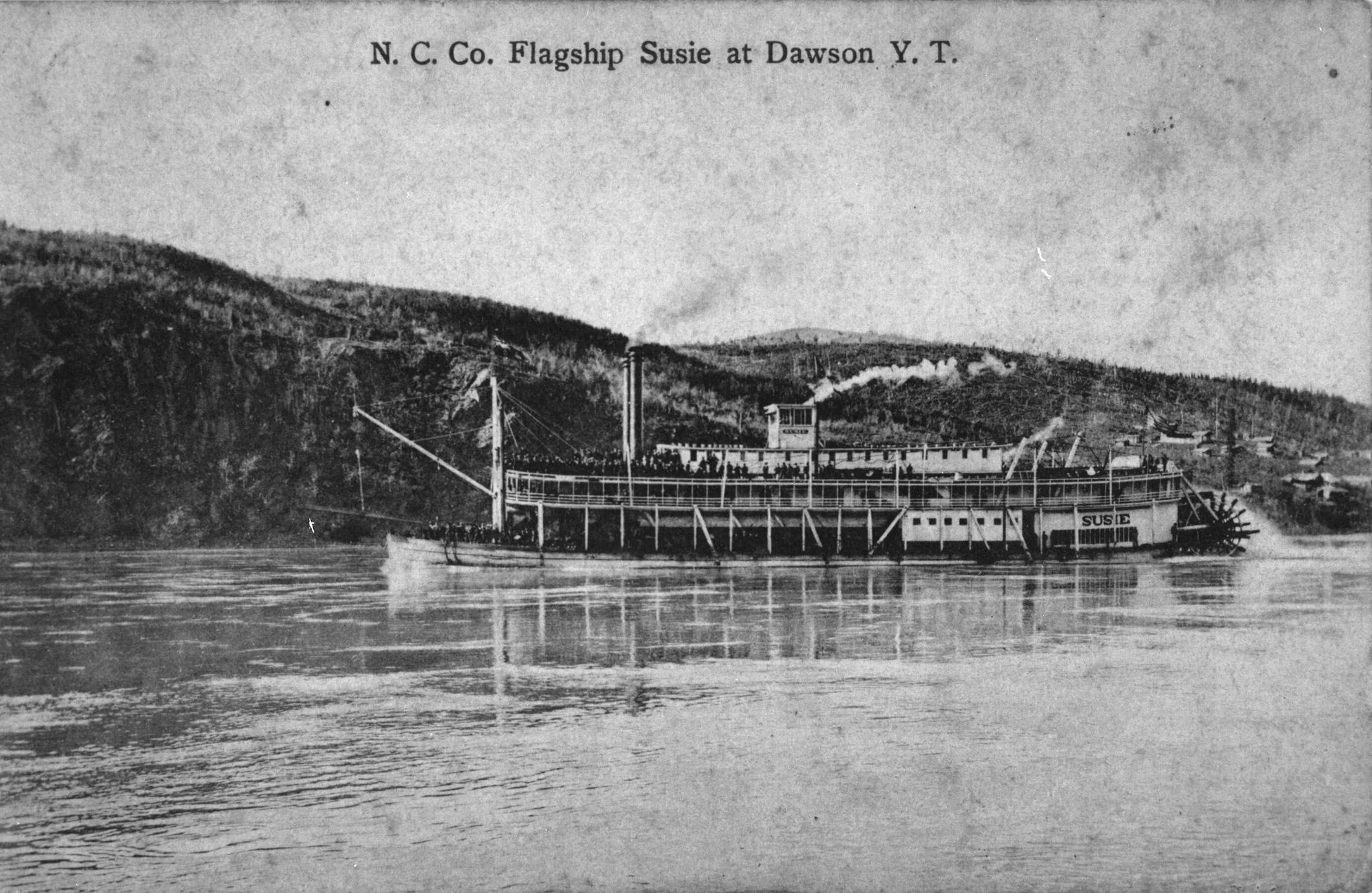
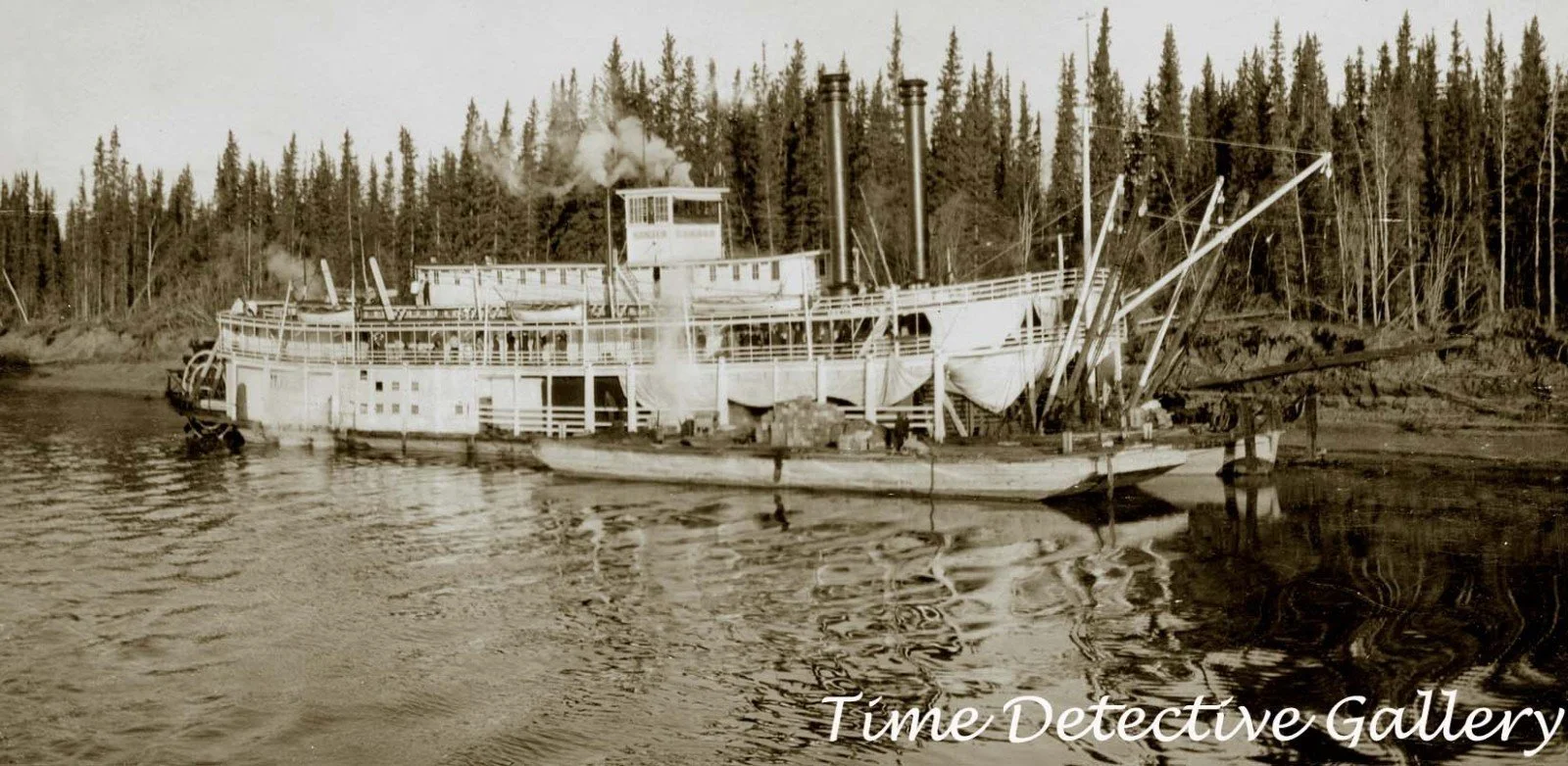
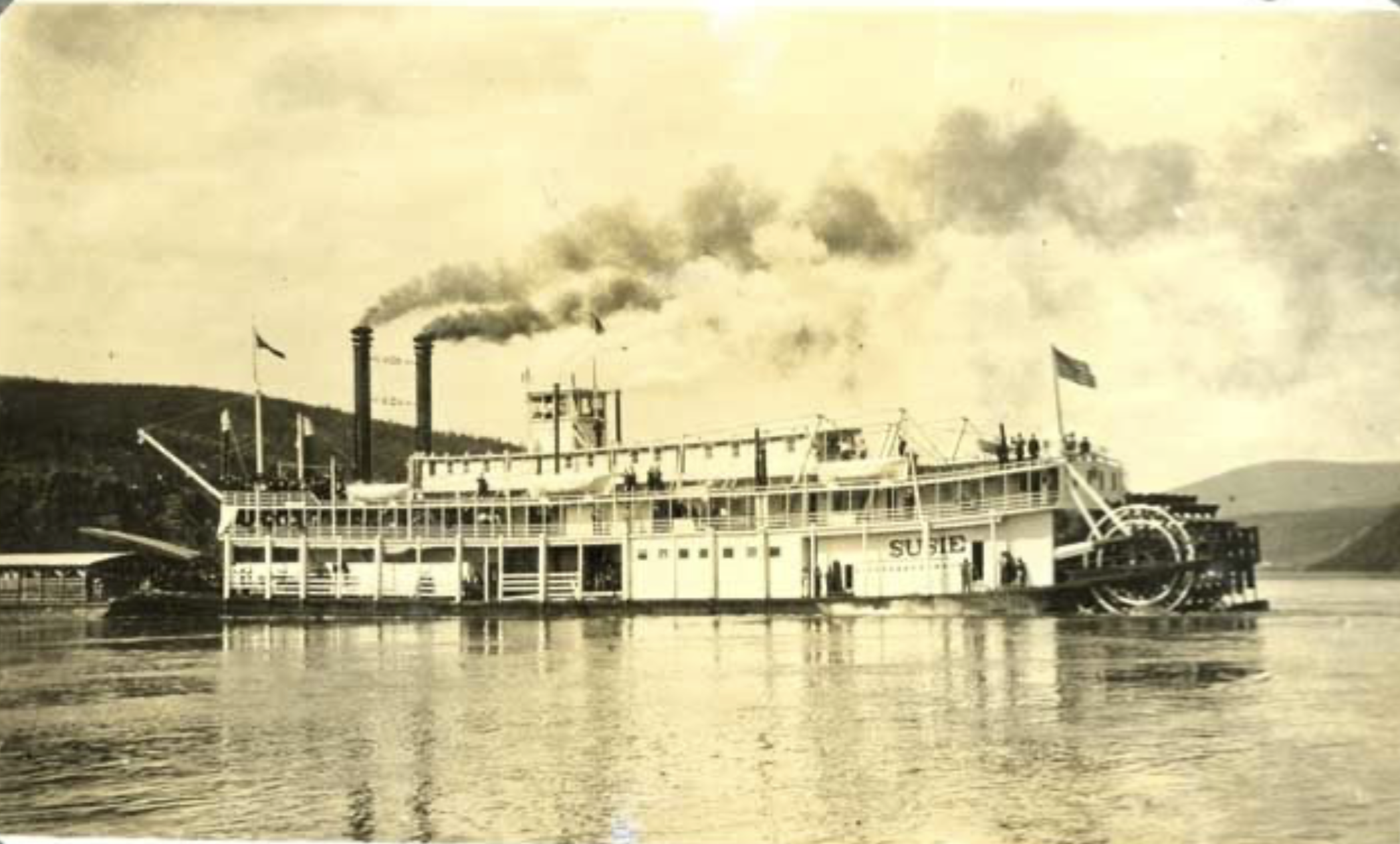
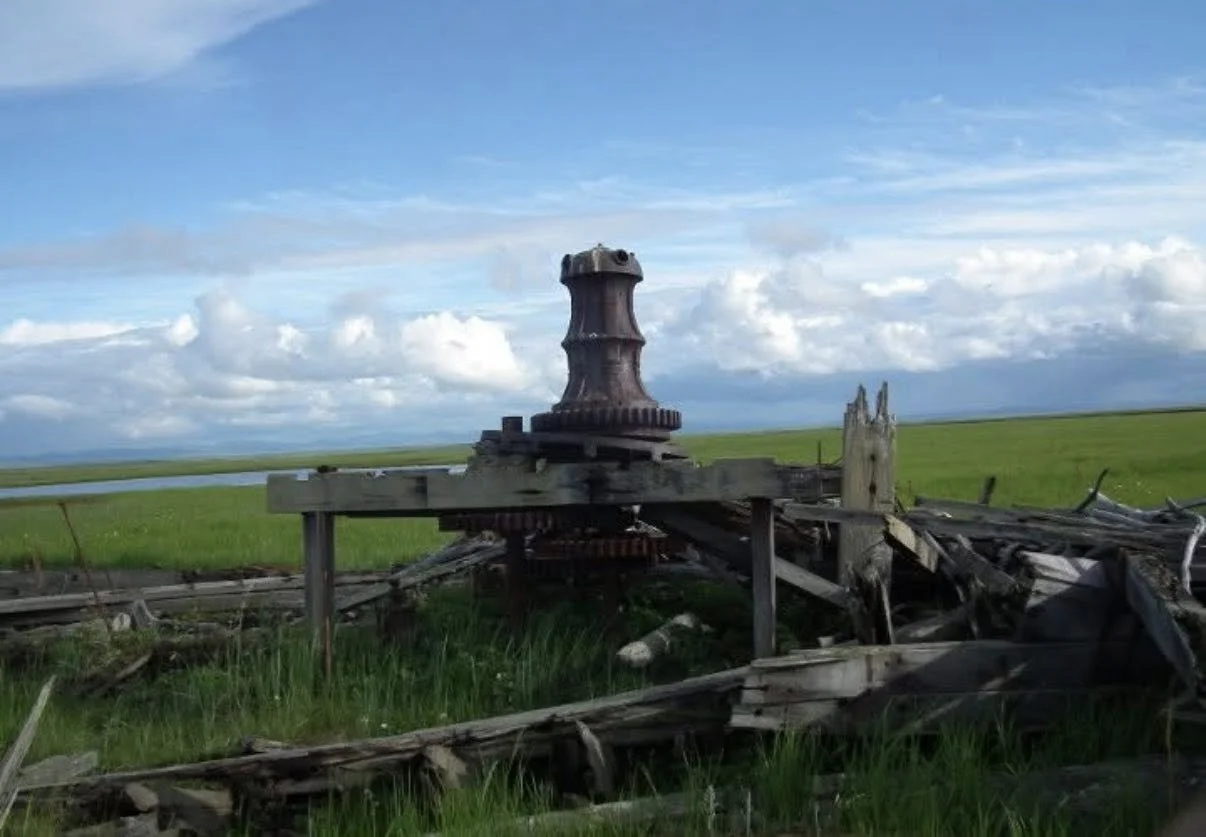
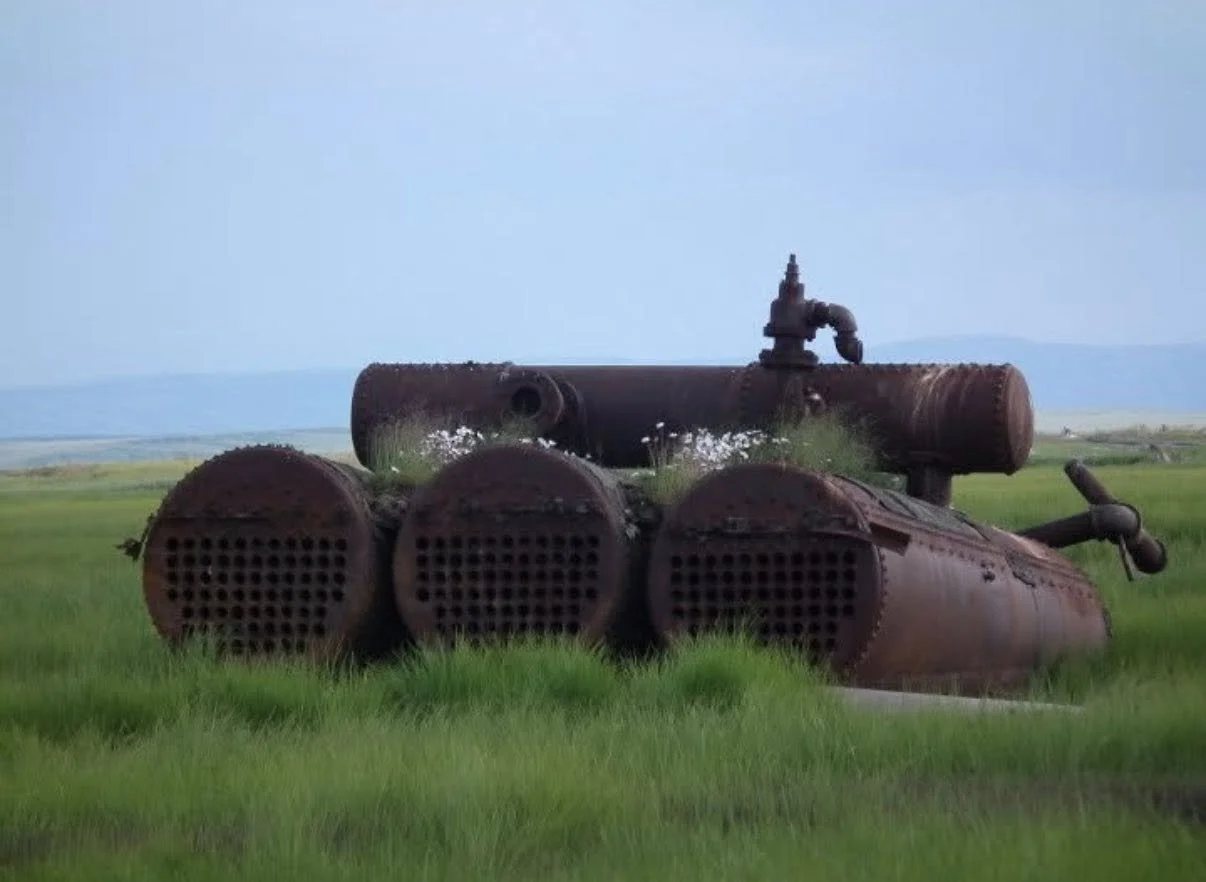
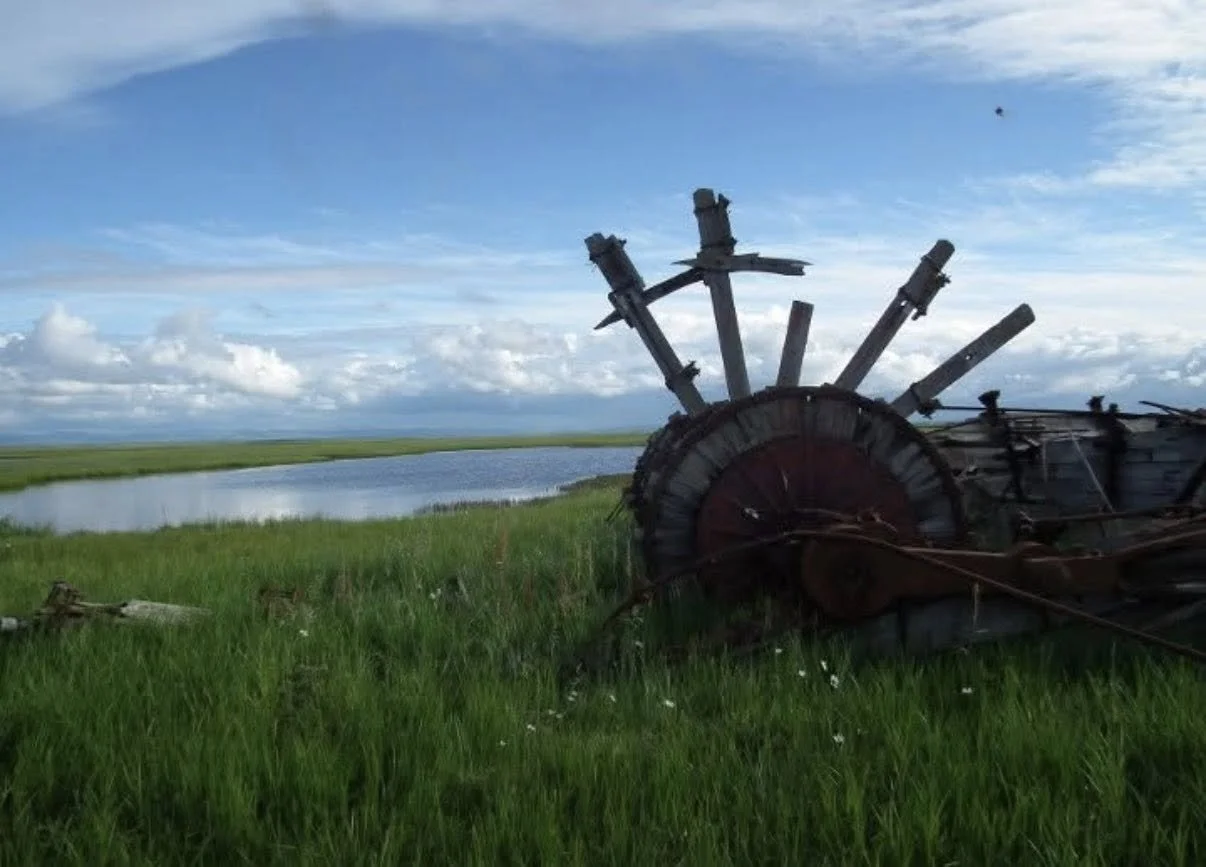
Once again, her machinery was sold and installed in an entirely new ship, named Susie which was destined for the Yukon River in Alaska. Here, she was used to transport passengers and cargo for the Alaska Commercial Company at the tail end of the Klondike Gold Rush. Afterward, she would remain operational until 1919. Finally, after some 21 years of service, Susie was brought into a shallow estuary near Saint Michael, Alaska and abandoned. This area, known as the Saint Michael ship graveyard, was the final destination for no less than half a dozen steamers. As the wrecks were abandoned, locals came to strip wood and other parts from the ships for use in building their homes.
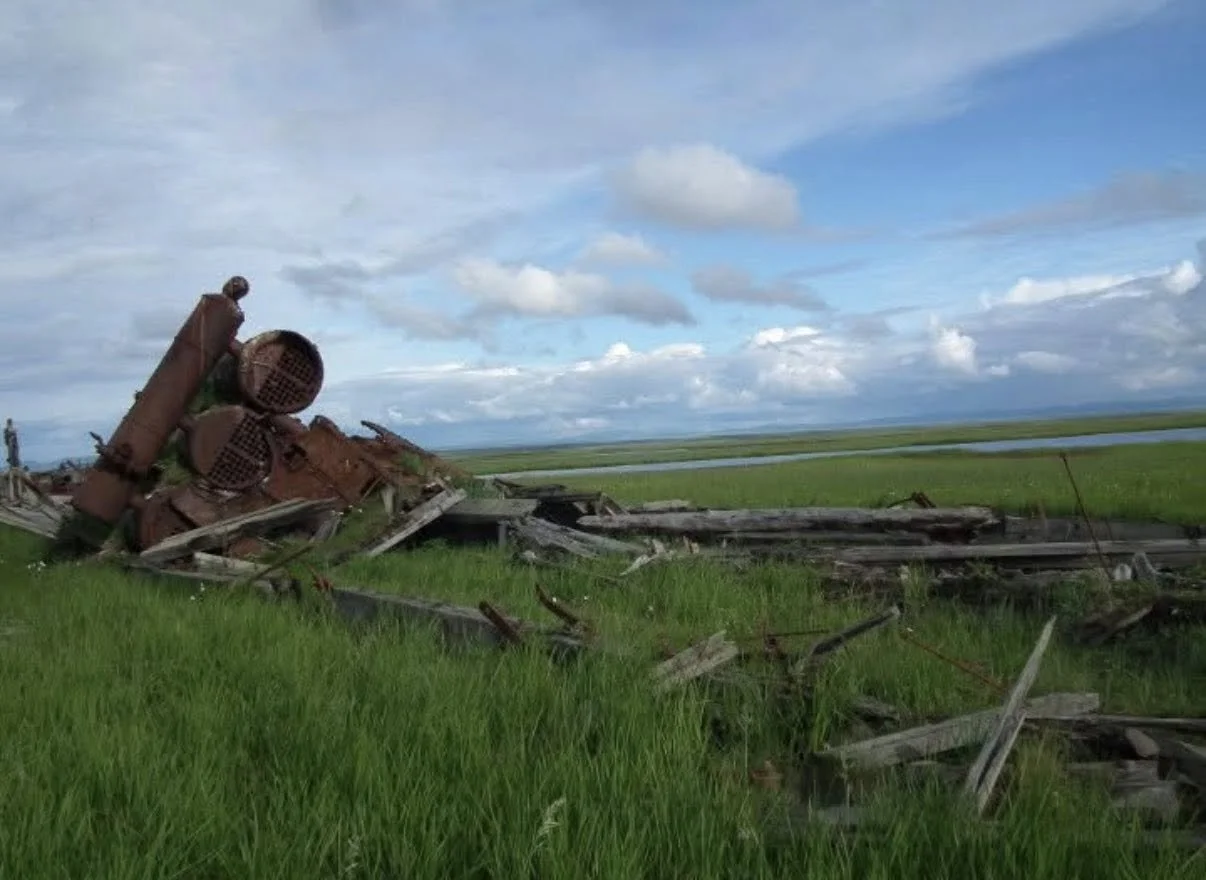
Today, the Saint Michael ship graveyard still remains as a testament to the great Alaskan steamers of the late 1800’s and early 1900’s. The gallery below shows the current state of these wrecks, which have been reduced to little more than their boilers, piping, and a few scraps of wood still clinging to rusted paddlewheel frames.
Somewhere among these wrecks, in fields of grass and backdropped by crisp Alaskan mountains, lies the Susie. By association this would also be the final resting place for the Belle’s engines.
it seems a fitting scene for that once great “palace steamer”, the Belle of Minnetonka.

Author’s Note:
This article was originally my second to be published but was both incredibly short and painfully inaccurate. What you’ve just read is a lovingly revised, and somewhat painstakingly researched, version of my earlier work.
The Belle of Minnetonka is, perhaps, one of the most influential parts of Lake Minnetonka’s history which had originally motivated me to share our community’s deep past.
A past which, as evidenced, reaches far beyond our own shores.
Bibliography of sources:
Riverboat Packet Phil Sheridan, Ohio County Library
Phil Sheridan images, UW-Madison Library archives
Header image Belle of Minnetonka, Lake Minnetonka Souvenir Booklet, Witteman Bros, NY 1886, Minnetonka Minute private archive,
Other Belle of Minnetonka images largely from Lake Minnetonka Historical Society. See individual photos for additional information or other sources.
A Directory of Old Boats, McGinnis, 2010
A Record of Old Boats, Edgar, 1934
Lake Minnetonka’s Historic Hotels, Wilson Meyer, 1997
University of Wisconsin Madison library archive
Yukon steamer Susie photos: see sources on individual photos in gallery
St. Michael, AK ship graveyard photos by Brad Smith. To view Brad’s full gallery, click below: