A Familiar Old Scene
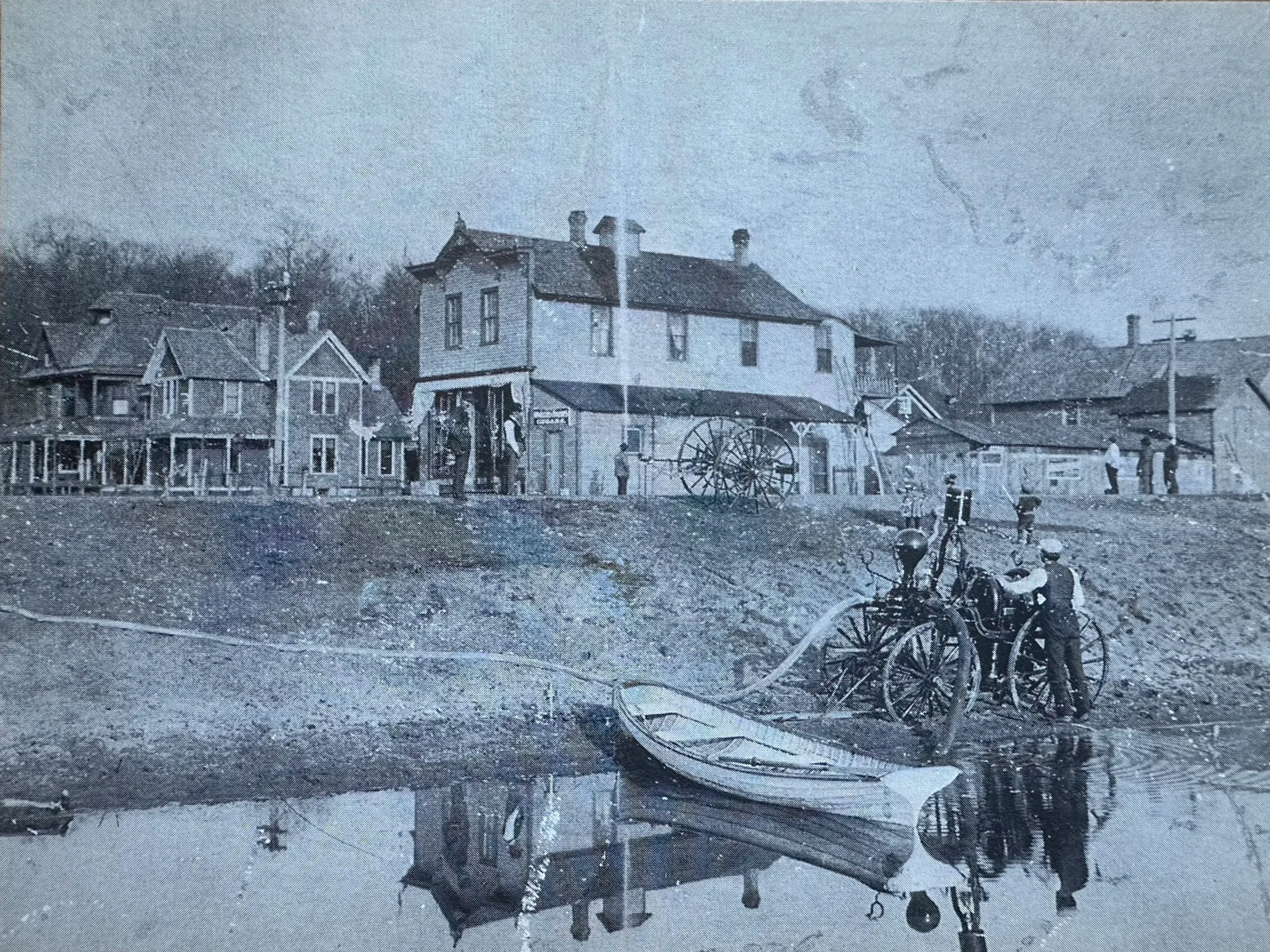
At the Minnetonka Minute we look at the history that, not too long ago, occupied the very land we now call home. While we share many photos of easily recognized landmarks and locations, the above image is not quite that way. So, where do we find ourselves today?
Welcome to Wayzata! Well, maybe not quite the Wayzata we know in the 21st century. . . Rather, this is the Wayzata of 1895. As far as most towns go, it’s tiny, having less than 300 residents. The roads are dirt, the train runs along the shoreline daily, and life here is somewhat quaint. Tourism to the town has waned over the past five or six years and, with it, much of the bustle has died down. You might be wondering “where exactly are we standing?” and the answer may be surprising. We’re standing where, in 130 years, the Wayzata public docks will be located. The building nearest shore sits at the intersection of Lake Street and Broadway Avenue, where Cōv restaurant will someday be and one home, situated at the far left of our view, will be recognizable for another 120 years. In 2015 it’s known as the Gold Mine Antiques shop but today it’s a relatively new house built by the Braden family, who were somewhat early settlers to Wayzata.
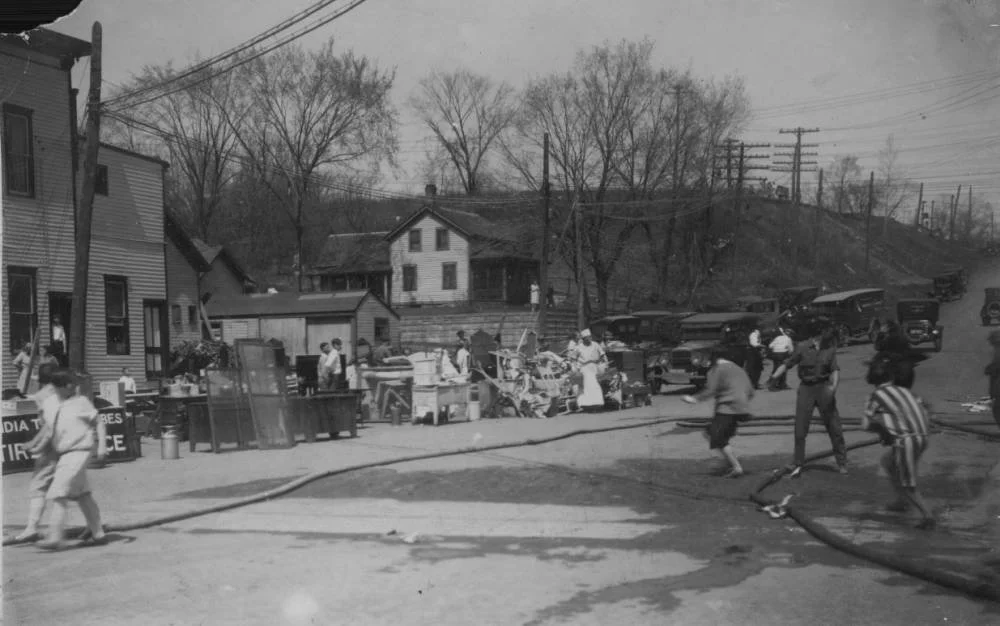
Image: Wayzata residents salvaging what they can from buildings impacted by the 1926 block fire. View looking up Broadway Ave
The Braden family built their home at 322 Broadway in 1886 and occupied it for a few decades until, in 1924, it would be sold and converted to a boarding house. However, on April 30, 1926 a massive fire broke out and destroyed nearly every building on the block. Fortunately, the Braden house was only charred by the blaze and could be repaired. However, the devastation to other nearby inns and boarding houses brought an effective end to the town’s boarding house era.
As time went on and the town evolved around it, the Braden house remained largely unchanged until, in 1961, it was purchased for use as a shop for the founders of Gold Mine Antiques. The 21 women who founded the business gave the structure much needed care and kept it in good condition until selling it in 2016 to a development firm who would see the building demolished and repurposed into a larger shopping district.
Built in an era of steamboats, horse drawn wagons, and locomotives, the home endured well beyond its era into one of high-end development, automobiles, and more human connection than was ever thought possible. From a historical perspective, the great benefit of the Minnetonka shoreline is that it’s largely unchanged. It generally maintains the same contours as it always has and allows us to use it as the reference point for our comparisons to the past. Interestingly, while the Braden house’s demolition lies almost a decade in the past, the viewpoint in this photo is still very real. We can still stand on the same point and look the same way, hold up the old photo and compare it to the modern scene.
Bibliography of Sources:
Header photo sourced from the Minnesota Digital Library
Body photo sourced from Hennepin County Library’s Digital Collections database
Sun Sailor, The Gold Mine Antiques Set to Close Next Month, 07/13/2016 https://www.hometownsource.com/sun_sailor/news/business/the-gold-mine-antiques-in-wayzata-set-to-close-next-month/article_6f954c99-ec27-5b71-95a5-a40959f49ae6.html