What Were the “Big Woods?”
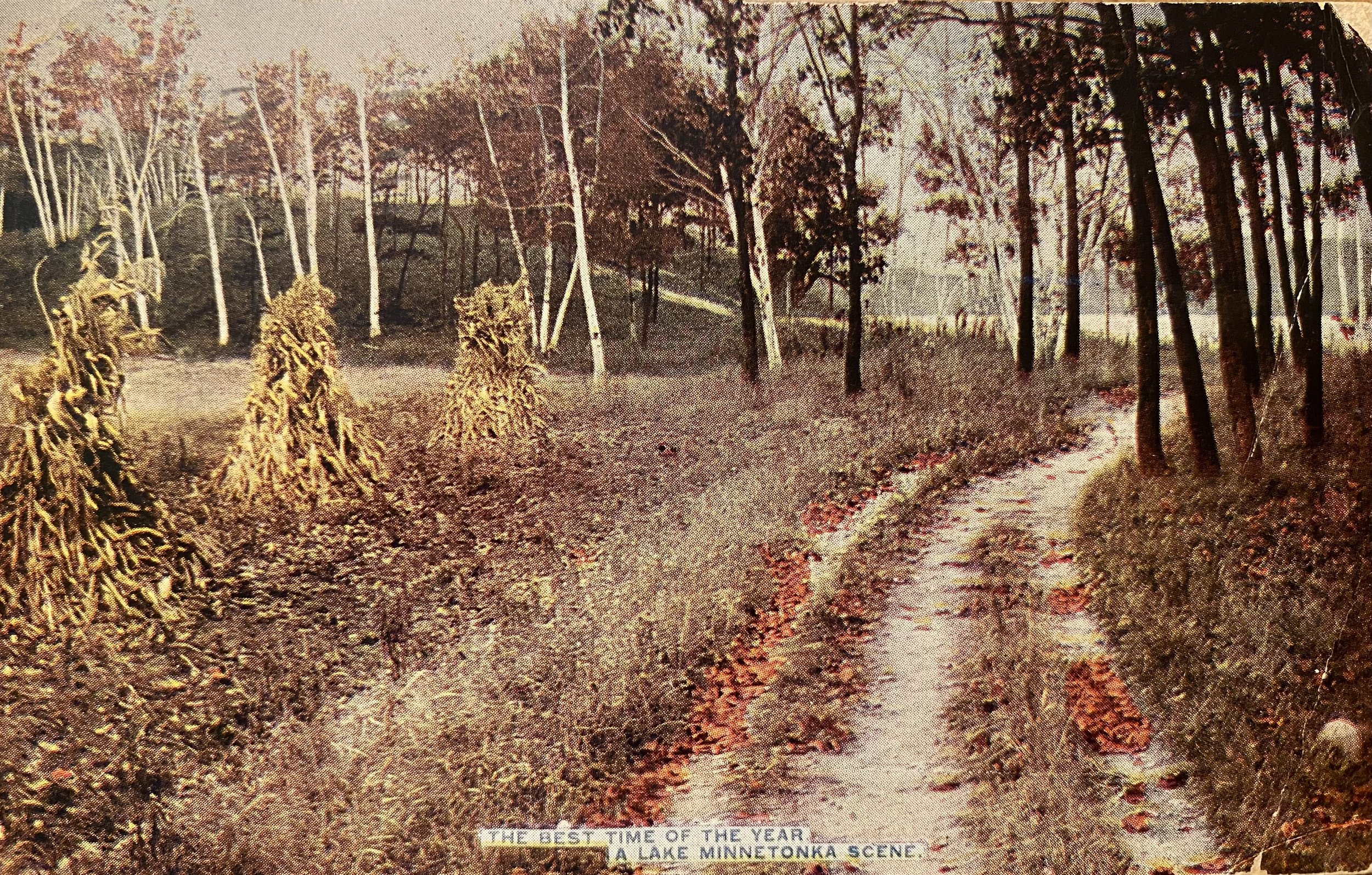
Many of us fondly reminisce over romantic images of the Big Woods that once blanketed the shores of Minnetonka. However, when talking with locals, I find that many don’t fully recognize what the Big Woods really were! Rather, they conjure up whatever feels “right” in their mind. Oftentimes I’m described images of romantic forests with speckles of blue water seen between packed rows of thick tree trunks, enchanting wildlife scattering at the sound of approaching native hunters, and a tiny log cabin staked out in a hard-earned clearing of woods. While not wholly incorrect, there’s much more to the Big Woods than these yarns.
Relative to the whole story of Lake Minnetonka the Big Woods were extremely short lived but, before we get to that let’s talk about exactly what the Big Woods were. This particular forest was a pocket ecosystem largely encircled by other hardwood forests to the north and plains to the south and west. In terms of its location, this is the best way to describe it in words: The Big Woods’ eastern edge lay just west of Minneapolis, while its northernmost reach was near Monticello. It expanded as far west as Norwood Young America and ended just outside of Mankato to the south. In its prime, this area covered some 5,000 square miles.
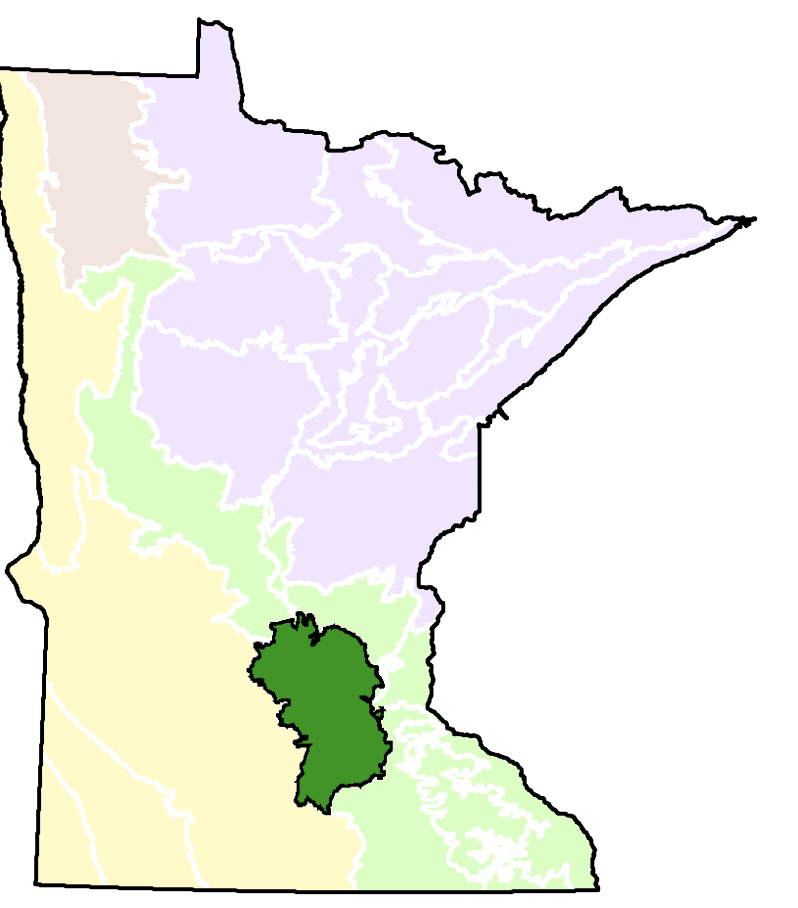
Of course, it’s easy to assume the woods were, indeed, big. No kidding. . . What made them truly big was the type of trees that dominated the region. Sugar maple, american elm, basswood and most importantly, red oak dominated the region’s high canopies while ironwood, aspen, and green ash grew right below their towering neighbors. Far below the thick green canopy of the woods sat the quiet, aquamarine, gems of Minnesota: countless pristine lakes. The lakes, left behind by long ago receded glaciers, were the lifeblood of the forests. They provided a steady water source for the trees but, more importantly, they acted as a natural barrier to slow or altogether halt forest fires. Their varied sizes and locations allowed the woods to sprawl with relatively little impact from natural disaster. This was especially the case on the forest’s southern edge where it met with the comparatively dry prairies that were so prone to wildfires. While fire was uncommon, it was still a danger which occasionally ripped through the dense woods.
Supported by a combination of rich, fertile, soil and plentiful rain, the forest was recognized by early settlers as a prime location for agriculture and, on average, it received 29-31 inches of rain during the growing season. These woods were young compared to many of their surrounding biomes and water features. Lake Minnetonka, for example, is many thousands of years old but the Big Woods formed just 400 to 600 years ago.
By 1849, settlement of the Minnesota region was in its infancy and, with it, logging began near Minneapolis and Saint Anthony Falls. Just ten years later, that settlement was beginning to reach Lake Minnetonka too. Original settlers could procure a tract of land, 160 acres in size, for only $200 and a handful of stipulations. They flocked to the land and, under the United States Government’s regulations, were required to clear at least an acre of that land. While this wasn’t the only requirement, it was certainly the most impactful to the Big Woods. Yet a far greater impact to the woods was less than a decade away. . .
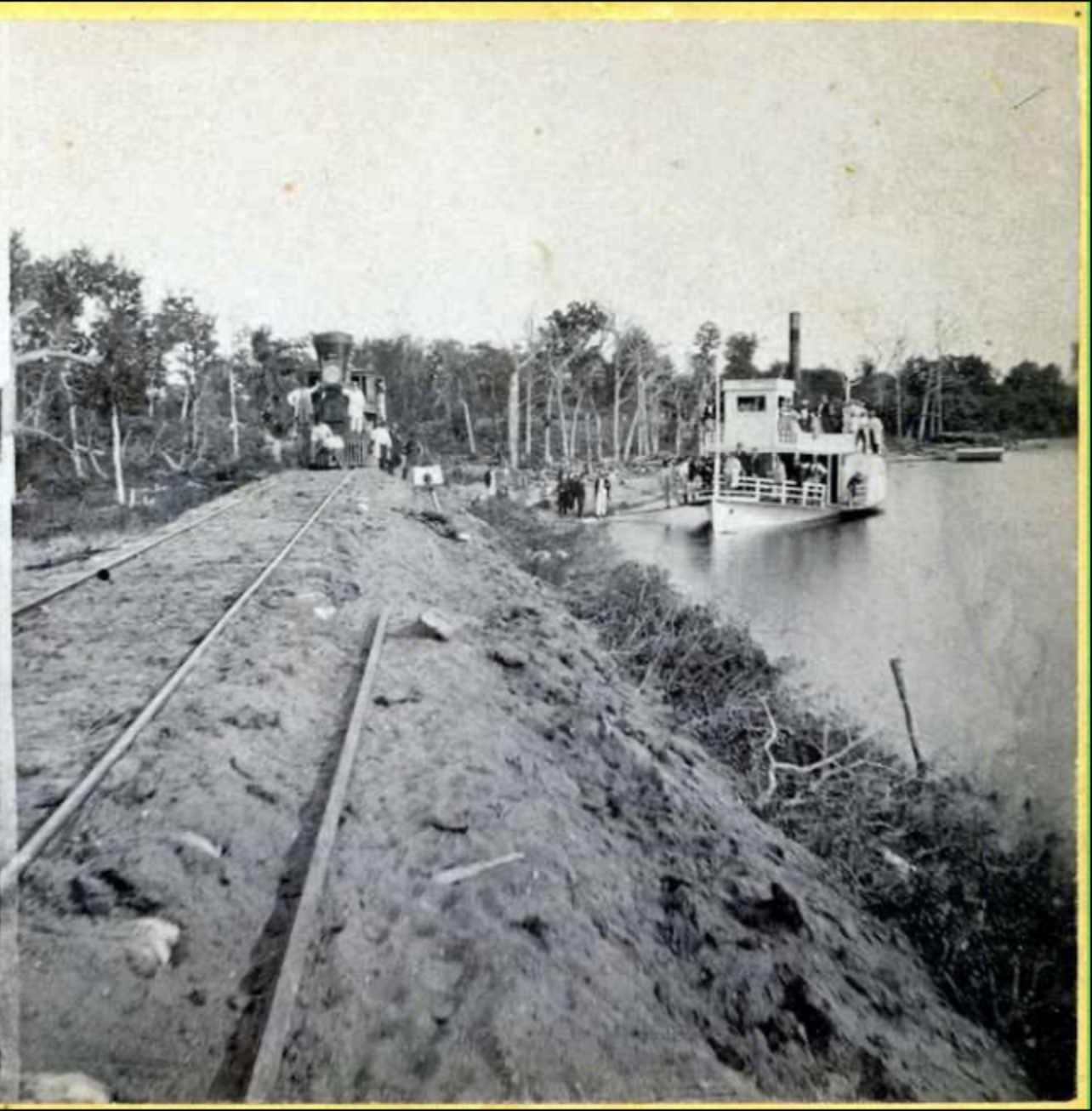
In the late summer of 1867, James J. Hill and the Saint Paul & Pacific Railroad arrived in Wayzata to great fanfare. Recognizing the opportunity presented to him by the mixture of poverty stricken settlers and their densely wooded lands, Hill encouraged logging through allowing settlers to sell cordwood directly to the railroad. Stirred to a fever by (relatively) easy money, the locals cleared land and sold off as many trees as they could fell. Some even found themselves so devoid of lumber that they had to purchase firewood back from the railway to heat their homes for the winter. Mammoth logs were floated across Wayzata and Gray’s Bay toward the station from nearby shores and the railway eagerly carted them into Minneapolis. Most Minnetonka lumber found its use in heating homes, fueling locomotives, and milling for furniture or construction. The effects were huge and, by 1900, much of the original Big Woods had been sacked, sold, and decimated.
What woods remained after easy logging was oftentimes cleared to make way for agricultural use. The fertile soil—created in part by the forest’s centuries long decomposition cycle—was exploited for growing crops, livestock feed, and housing animals. Additional clearing was done following subdivision to make way for cottages, roadways, and private enterprise.
Between 1880 and 1990, roughly 98% of the forest had been entirely wiped out, leaving behind scattered patches of Big Woods, such as Wayzata’s Big Woods Preserve park, which covers only fourteen acres. In 1945, the state of Minnesota procured 460 acres of land which was used in creating Nerstrand Big Woods State Park. This park is the largest remaining patch of Big Woods in the state and is firmly dedicated to its preservation and to telling the often overlooked story of the Big Woods.
For Minnetonka residents, things can be done to secure the beauty and natural strength of the locale. Planting native hardwood trees like oak, elm, and maple gives birds and insects a place to establish themselves and thrive. Removing invasive trees like buckthorn, black locust, and Norway maple help to open space for more natural flora. It’s shocking how much change can be made on the individual level and, ultimately, it’s up to the individual to do what they can to better the environment around them. Each small step has a big impact toward improving the vitality of the natural Lake Minnetonka landscape we all cherish!
Bibliography of Sources:
Big Woods Wiki - https://en.wikipedia.org/wiki/Big_Woods
Big Woods Subsection Profile, MN DNR - https://files.dnr.state.mn.us/assistance/nrplanning/bigpicture/cwcs/profiles/big_woods.pdf
Minnesota Ecoregions Map - https://upload.wikimedia.org/wikipedia/commons/8/8b/Minn_ecoregionsmap.pdf
Creation of Nerstrand Big Woods State Park, MN Historical Society - https://www.mnhs.org/mnopedia/search/index/event/creation-nerstrand-big-woods-state-park-1945
Controlling Unwanted Trees & Shrubs, University of Minnesota Extension - https://extension.umn.edu/planting-and-growing-guides/woody-vegetation-control#:~:text=Invasive%20trees%20and%20shrubs%20are%20non%2Dnative%20plants,Dogwood%20*%20Wild%20grape%20*%20Virginia%20creeper
Header photo - Minnetonka Minute private archive
Big Woods territory map - MN DNR
Railway stereoview - LMHS Digital Archive
Article Cover Photo - https://en.wikipedia.org/wiki/Nerstrand-Big_Woods_State_Park