The Legacy of a Lake
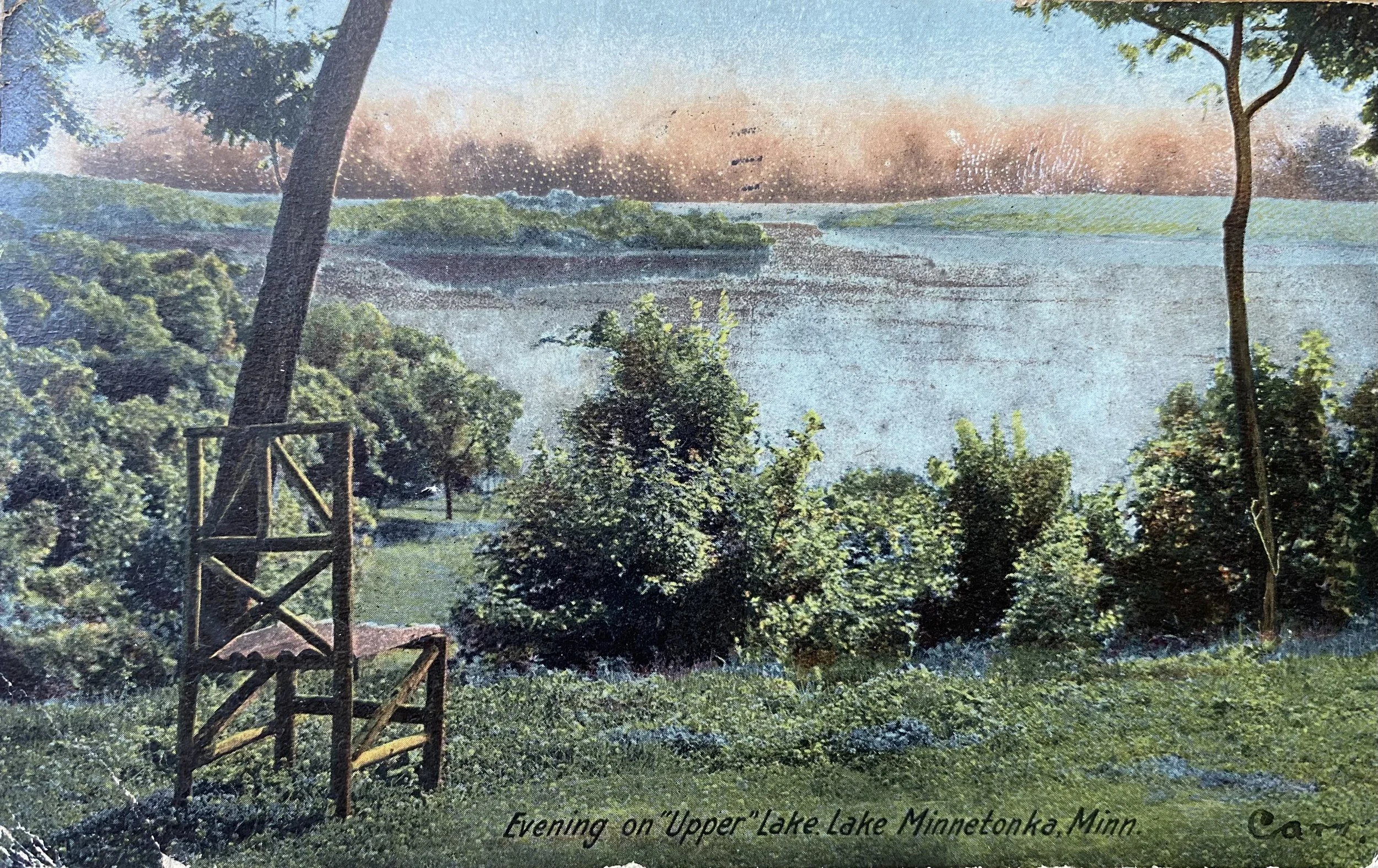
Since man first began to tread the Midwest’s rolling hills and expansive plains, he has recognized fully the enchantment and allure of Lake Minnetonka’s shimmering views.
Father Time and Mother Nature oversaw the land’s formation and joined hands in the task of forming one of Minnesota’s grandest scenes. While many lakes in Minnesota are formed through glaciation, Minnetonka is unusual in that it lies over two distinct glacial deposits which have left behind a wide array of flora, soil types, aquatic ecologies, and more. This can be seen when comparing the lake’s eastern and western halves, which locals refer to as both Lower and Upper lake, respectively. The Minnetonka chain of bays, straights, shallows, estuaries, islands, etc. come together to form what is undeniably among the finest examples of Minnesota’s 10,000 lakes, bearing geologic and ecologic similarities to nearly all others across the state.
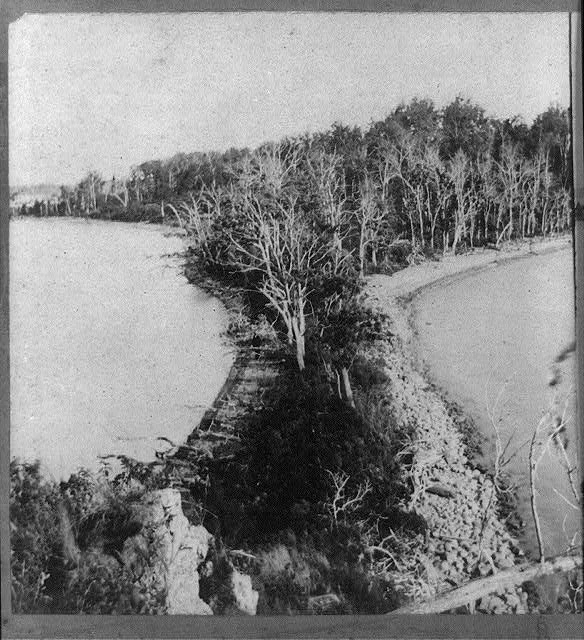
Native peoples of varying groups had been present here for upwards of ten thousand years, but it was the Algonquin Ojibway and Mdewakantonwan Dakota of the Sioux who traversed the Lake Minnetonka area directly prior to U.S. annexation of the Minnesota region. To them, Minnetonka offered a wide range of wild game and flora while also holding a deeply spiritual significance. Between roughly 500 B.C. and 1500 C.E., various tribes erected several hundred burial mounds along the lake’s shore to honor their dead, some of which are still visible today. On an elongated peninsula, across from what is now downtown Wayzata, the Dakota held ceremonies and worshiped at “Spirit Knob”, one of Minnetonka’s most prominent native features.
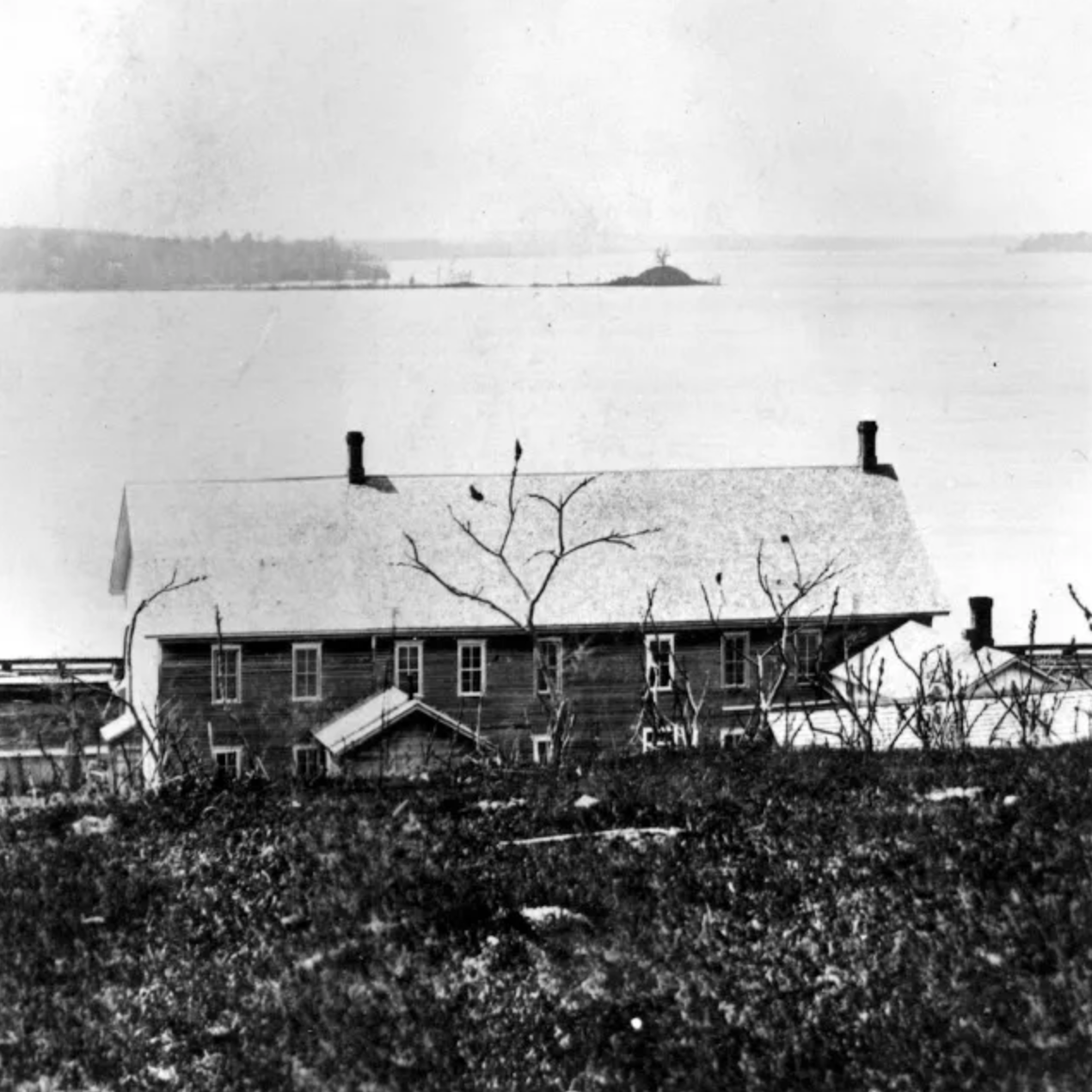
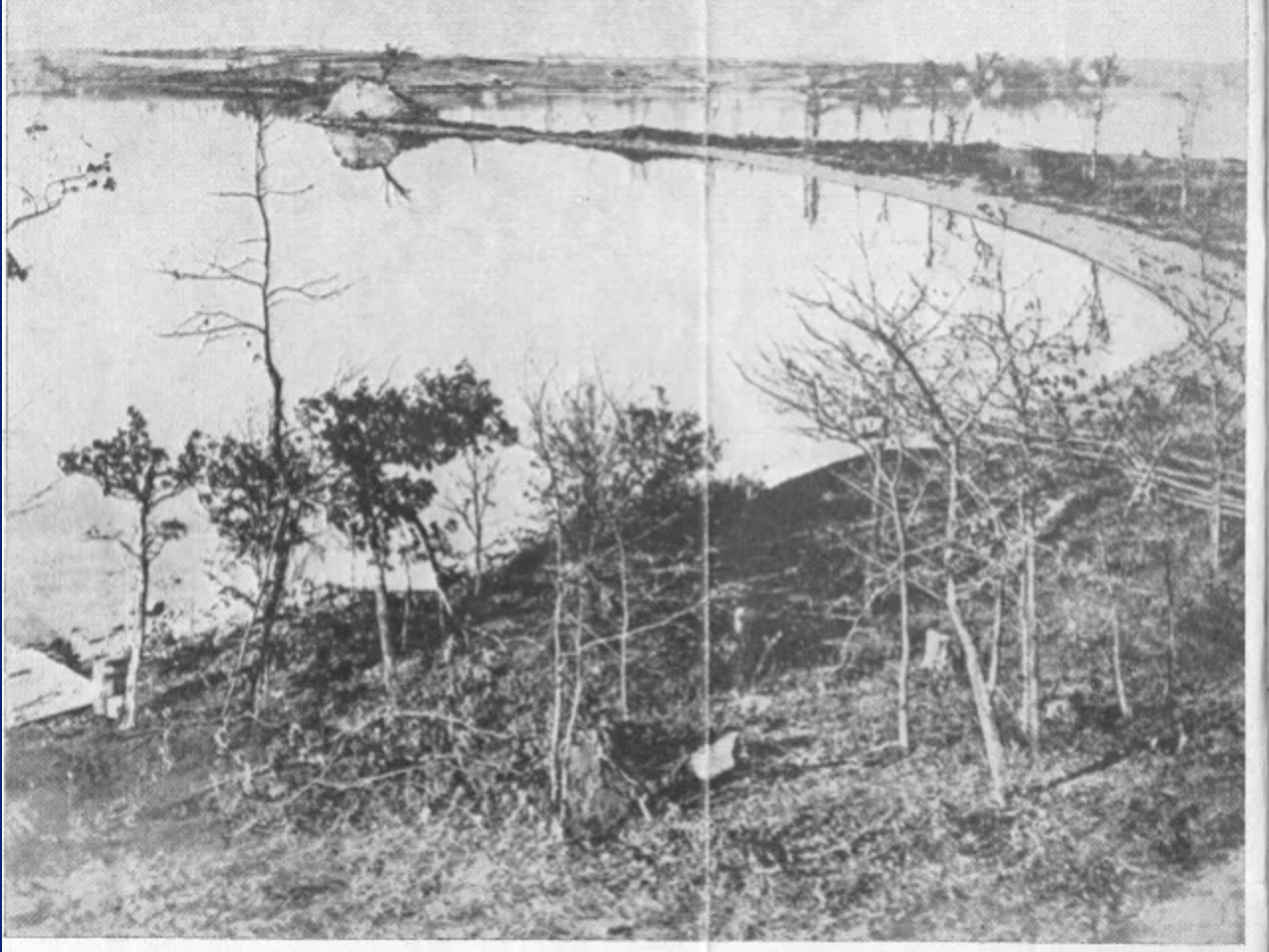
While visiting Minnetonka in 1852, Minnesota Governor Alexander Ramsey officially declared the lake as “Minnetonka”, which is what the Dakota had known the lake as.(1) The next year, settlement of Excelsior began, with Wayzata following in 1854. These were the first towns on Minnetonka, which now number 14 in total. From the onset, Minnetonka was destined to evolve into a major hub of nationally recognized esteem and on August 24, 1867, just one day after the rails were completed, the first train chugged into Wayzata.
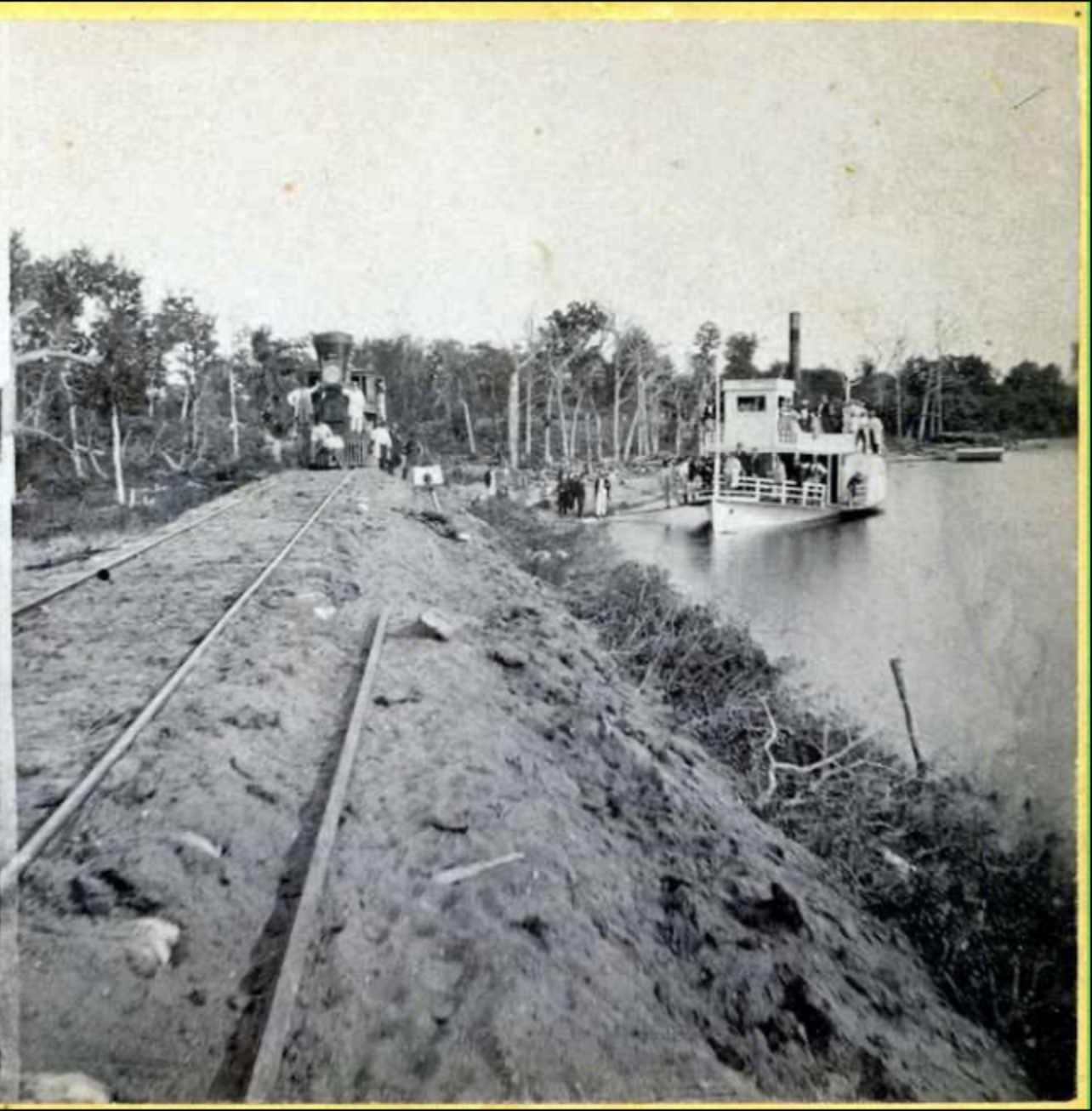
Operated by the Saint Paul & Pacific Railway, it was met by the lake’s sole steamboat, the Lady of the Lake (2), which had launched just seven years prior. Interest in Minnetonka was so great that trains would make daily trips to Wayzata, situated at the end of the line. In the following years, Wayzata would go on to boom with new industry through sales of cordwood to James. J. Hill for use in heating Saint Paul homes, fueling locomotives, and more. As well, they’d experience a ginseng boom, tourism explosion, and logging industry.
The following year, in 1868, the United States would be forever changed by a creation hailing form Minnetonka’s shores. Tonka Bay resident Peter Gideon introduced his Wealthy apple, marking the first interbred apple capable of surviving the harsh Midwestern winter. Almost overnight, Gideon’s Wealthy created a fruit economy which had horticulturists swarming the state for a sample of the groundbreaking creation. Gideon became a major attraction for the Minnesota State Fair and was later appointed as the first head of the University of Minnesota’s State Experimental Fruit Farm, a move which would influence the establishment of the Minnesota Landscape Arboretum in Chaska. By 1910, the Wealthy had become one of the top five apples grown in the United States and, today, a great many apple variants can trace their lineage back to Minnetonka and the Wealthy apple. Gideon’s lifelong contributions to horticulture extends far beyond apples, and birthed an industry which has delivered to Minnesota billions in revenue since.
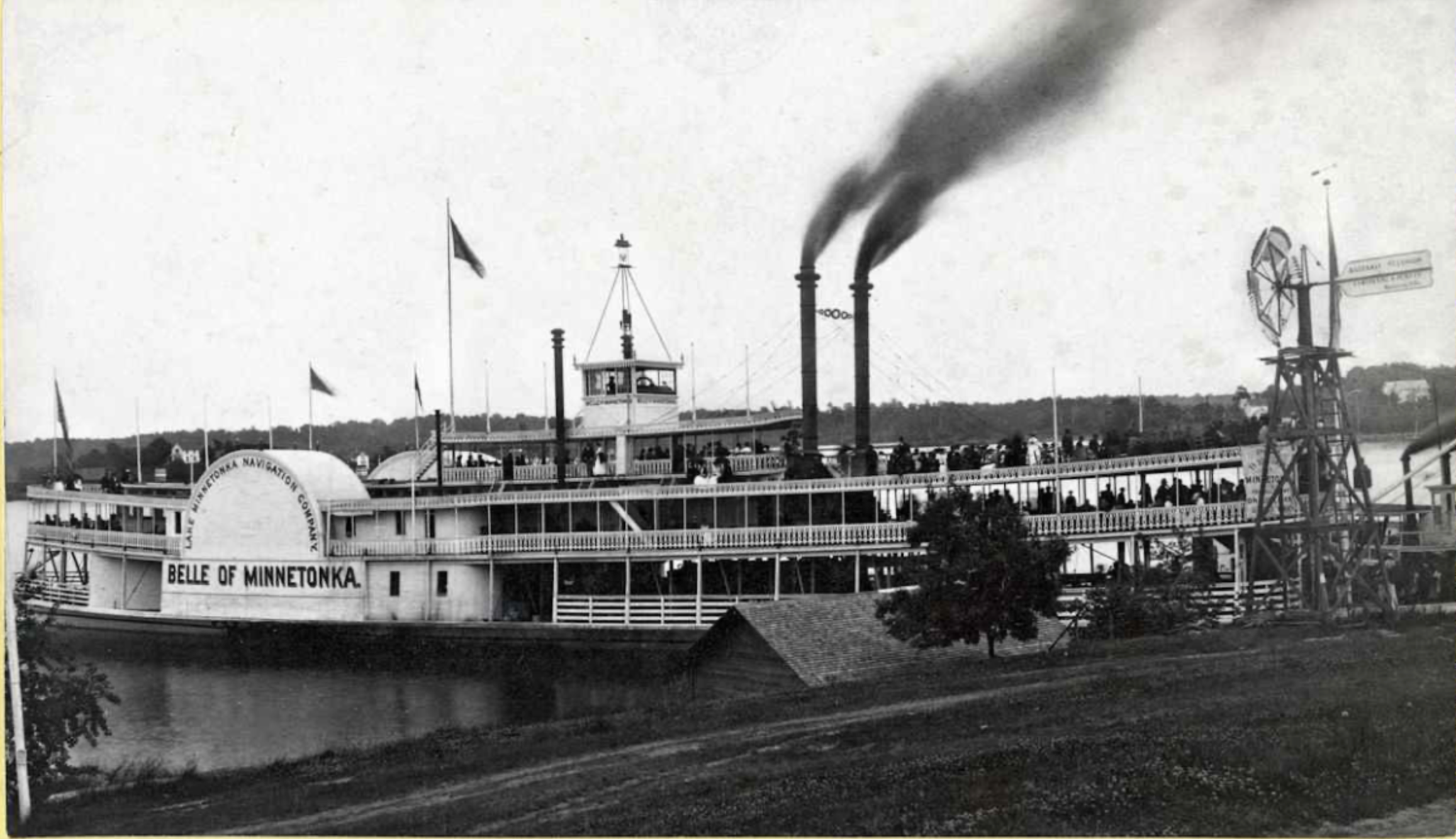
Still, Lake Minnetonka was far from waning on the national stage and, by 1885, the lake had garnered new attention as one of America’s premier tourist destinations. With the opening of the Lake Park Hotel, Hotel Saint Louis, Del Otero Hotel, Hotel Lafayette, and some 60 others (3), Minnetonka saw an influx of wealthy travelers from major cities like Saint Louis, Kansas City, and New Orleans. To stimulate its economy, both railway baron James J. Hill and Minnesota Senator William Washburn operated the two largest steamboats on the lake, the Belle of Minnetonka and City of Saint Louis, respectively. At the time, both steamers were hailed as some of the grandest inland vessels in the nation. This Golden Era drew the eye of both Presidents Ulysses S. Grant and Chester A. Arthur, who visited Minnetonka at James J. Hill’s Hotel Lafayette. in 1888, Lafayette would employ W.E.B. Du Bois, who would go on to become one of the most influential civil rights leaders of his time and a founding member of the NAACP in 1910.
By the dawn of the 20th century, the winds of change had began to blow on Minnetonka again as the Twin City Rapid Transit Company began developing streetcar lines from Hopkins to Excelsior and Deephaven. In a 1906 effort to capture local tourism, the company launched six identical “Streetcar Boats” which would prove to be essentially one of a kind in America. Their infrastructure offered metropolitan residents easy access to Minnetonka via rail & water with unrivaled convenience, while also making major investments in a theme park on Big Island. (4)
It was during this time that, on Minnetonka’s western shore, groundbreaking progress was occurring in the national dairy scene. Albert C. Loring’s Woodend Dairy Farm opened in 1905 and made advancements in dairy collection and purification. Through diligent cattle selection, facility sanitization, employee education, and pasteurization the Woodend Dairy Farm would deliver “Certified Milk” of a higher quality to Minneapolis & Saint Paul residents than was available to the citizens of New York. Their process was so transformative that Woodend’s cattle would regularly double or triple the production of traditional dairy cattle. While not operating on an industrial scale, Woodend proved that cleanly and healthful practices were the path forward in American dairy production. The Minneapolis Journal even went as far as to say, “A pure milk supply is of more vital consequence to the people of Minneapolis than is a pure water supply.”
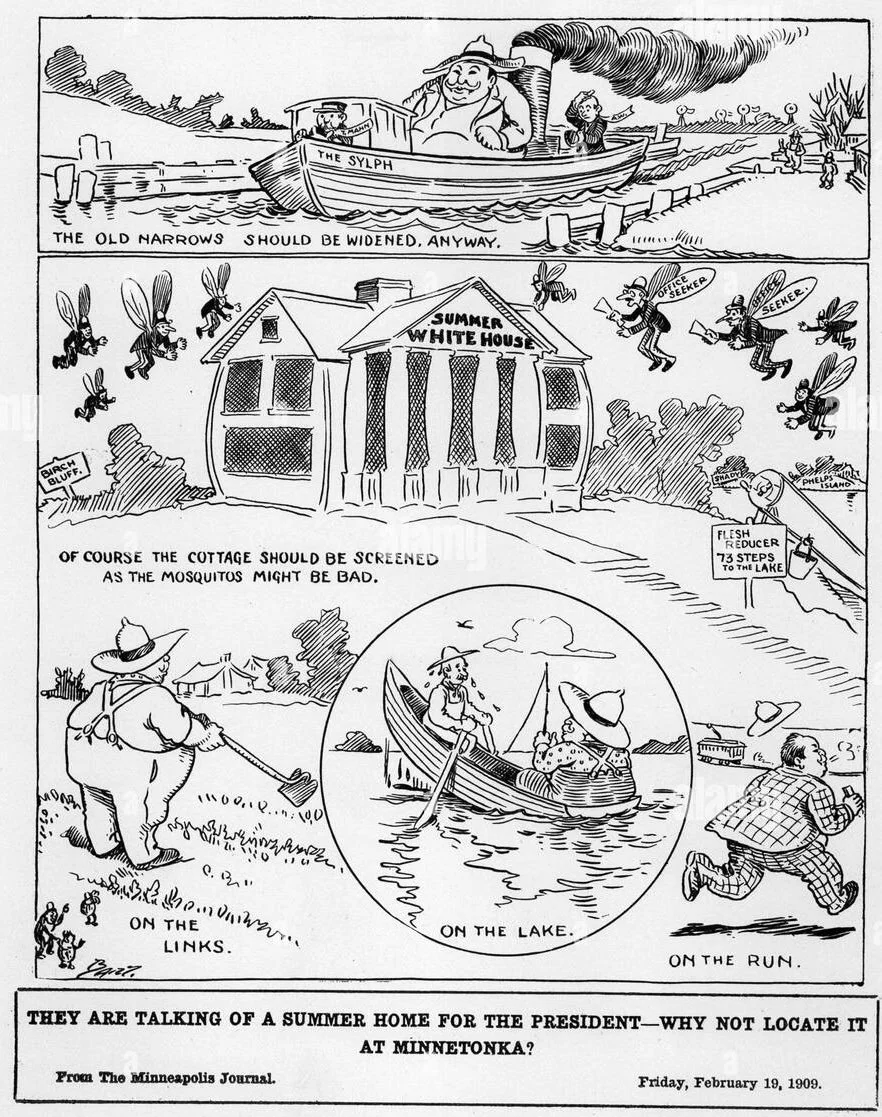
Lake Minnetonka would receive yet more acclaim in 1911 from sitting President William Howard Taft who made a visit to the area to display, for some 40 members of a Japanese delegation, the splendor of Minnetonka. Reminiscing on his travels, Taft would praise Minnetonka as having the best views from his entire sightseeing tour of the United States! Shortly after, in 1913, American composer Thurlow Lieurance would record, orchestrate, and publish a traditionally Sioux song which he titled “By the Water of Minnetonka.” It quickly became a cornerstone of the Indianist Movement in American classical composition and was heavily reproduced across the nation through the ensuing decades. Today, Lieurance’s title is sometimes confused as having originated from pop star Prince’s famous quote, “Purify yourself in the waters of Lake Minnetonka” which is still recounted across the nation in popular media.(5)
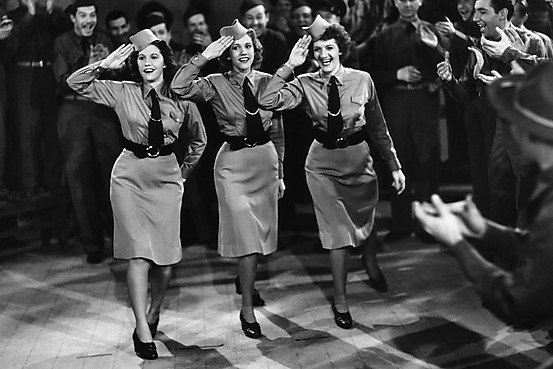
While Lieurance was enjoying the spotlight, another sweet-sounding group was emerging with deep tires to Mound. The Andrews Sisters and their distinctive vocal sound became synonymous with popular music of the 1940’s. It was through their iconic songs such as “Boogie, Woogie, Bugle Boy of Company B” and “Rum and Coca-Cola” that the U.S. military found its voice in World War 2. Through the war, the trip regularly entertained GI’s in both the European and Pacific theaters. Over their career, the Andrews Sisters sold more than 75 million records, starred in 17 films, and scored some 113 Billboard hits, 47 of which reached the Top 10, beating out both Elvis Presley and the Beatles.
As the Andrews Sisters were at the height of their career, another name was just getting on its feet. Mound Metalworks opened in 1946 with a focus on manufacturing gardening tools. Soon after, the company would be approached by a local with an interest in partnering and who held several patents for children’s toys. By 1955, Mound Metalworks officially rebranded as Tonka Toys Inc. and quickly became a nationally recognized juggernaut in the children’s toy industry.
Yet, all was not perfect around Minnetonka. Like many other bodies of water, it had been greatly abused over the decades as a makeshift junkyard for all types of refuse. While the lakebed famously became the final resting place for more than half a dozen major steamboats, it would ultimately come to harbor some 100 wrecks in total. The bottom is also peppered with other sunken “anomalies” such as automobiles, garbage piles, and miscellaneous objects which are now the focus of several maritime archeological studies. Simultaneously, some lakeside towns and businesses were using Minnetonka as an outlet for discharging effluent waste and industrial chemicals. Hotel Lafayette, perhaps the greatest offender, discharged their sewage directly into Crystal Bay. The combination of improperly treated wastewater and farmland runoff brought tremendous amounts of ecologically damaging phosphorus into the water and, following massive public outcry, the Lake Minnetonka Conservation District was formed in 1971 to address the pollution crisis. The LMCD was among the first of its kind in managing the preservation and upkeep of a lake’s ecological well-being. Their early partnerships with businesses like Twin City Federal Bank helped raise awareness to curtail pollution while their broader legislative efforts would see all 14 cities on the lake install proper waste management systems by the end of the decade. Today, Lake Minnetonka’s water quality ranks among the highest of all Metro and outer Metro lakes. . .
In the modern era, this community continues to excel as a flourishing locale for multimillion dollar investment via thousands of high end homes and commercial developments. To boot, Lake Minnetonka maintains its distinctive leisure economy through boating, water sports, fishing, dining, entertainment, and more.
Among our state’s 10,000-plus lakes, Lake Minnetonka uniquely embodies archeological, agricultural, industrial, and national significance, while its surrounding cities consistently rank among the state’s highest value municipalities. From past to present, she continues to affirm her title as that one great “Queen of Western Lakes.”
Author’s Note:
This article was produced as a draft for a larger production which, I hope, yields a great benefit for the Lake Minnetonka community in the near future. As much as I’d love to share additional details right now, I cannot. Typically, I’m a believer in only publishing articles here after they’ve been published elsewhere. (When applicable) However, this article has evolved so much that, when it does eventually publish elsewhere, it’ll be a wholly unrecognizable document.
The article you’ve just read was peer reviewed by local author historians Paul Maravelas & Scott McGinnis, to whom I’m extremely thankful. Their time and expertise led this to becoming one of the most accurate and detailed articles published on the Minnetonka Minute to date.
Footnotes:
Governor Ramsey named Minnetonka while visiting the Minnetonka Mills, which was located on the Minnehaha Creek near the historic Charles Burwell House.
Steamer Lady of the Lake is better known by her prior title as the Governor Ramsey. She had been renamed just prior to the train’s arrival to Wayzata.
It’s important to note that not ALL 60 some hotels opened in the 1880’s. However, many of the “grand” hotels did open in this decade and would become the icons of the area’s tourism boom throughout the ensuing decades.
The TCRT would also purchase the Lake Park Hotel and rename it to Tonka Bay Hotel in a continued effort to capitalize on tourism in the area, creating a pseudo monopoly over tourism. Though this was destined to not last.
This is a broad assumption which I’ve ascertained from talking to hundreds of locals over the years. While not as much of a “credible” fact as the rest of this article, the author feels it’s an extremely safe assumption.
I wanted to add a great many additional photos but, for the sake of space consumption and flow, I’ve elected to leave most out. However, they can be seen among many related articles spread throughout the Minnetonka Minute website. Simply search keywords of your interest in the search bar on the “History” page!
Bibliography of Sources:
Web:
Peter Gideon: https://www.mnhs.org/mnopedia/search/index/thing/wealthy-apple
Hotel Lafayette & WEB Du Bois: https://www.lafayetteclub.com/explore
Thurlow Lieurance https://en.wikipedia.org/wiki/Thurlow_Lieurance
Mound Metalworks & Tonka Toys: https://en.wikipedia.org/wiki/Tonka
Books:
National Health Journal Minnetonka Edition, 06/15/1899
Picturesque Minnetonka, Its Natural Beauties & Attractions, S.E Ellis, 1906
By the Waters of Minnetonka (Sheet Music), Lieurance, 1913
A Record of Old Boats, Edgar, 1934
Historical Backgrounds of Mound, Minnesota, Gimmestad, 1964
Happenings Around Wayzata, Wilson Meyer, 1980
Lake Minnetonka’s Historic Hotels, Wilson Meyer, 1997
The Great American Apple Wizard, Curran, 2004
The Andrews Sisters and their 100 year connection to Lake Minnetonka and Mound Minnesota, Rockvam, 2005
A Directory of Old Boats, McGinnis, 2010
The History of Big Island Lake Minnetonka, Maravelas, 2023
Image Sources by Set:
Minnetonka Minute private archive
Library of Congress / LMHS
Minnetonka Minute private archive
LMHS
Original, Minneapolis Journal, 1909. Specific image source, Alamy - https://www.alamy.com/stock-photo/political-cartoon-white-house.html?blackwhite=1&sortBy=relevant
Wall Street Journal - https://www.wsj.com/articles/BL-SEB-73351
Article peer reviewed by Paul Maravelas & Scott McGinnis